


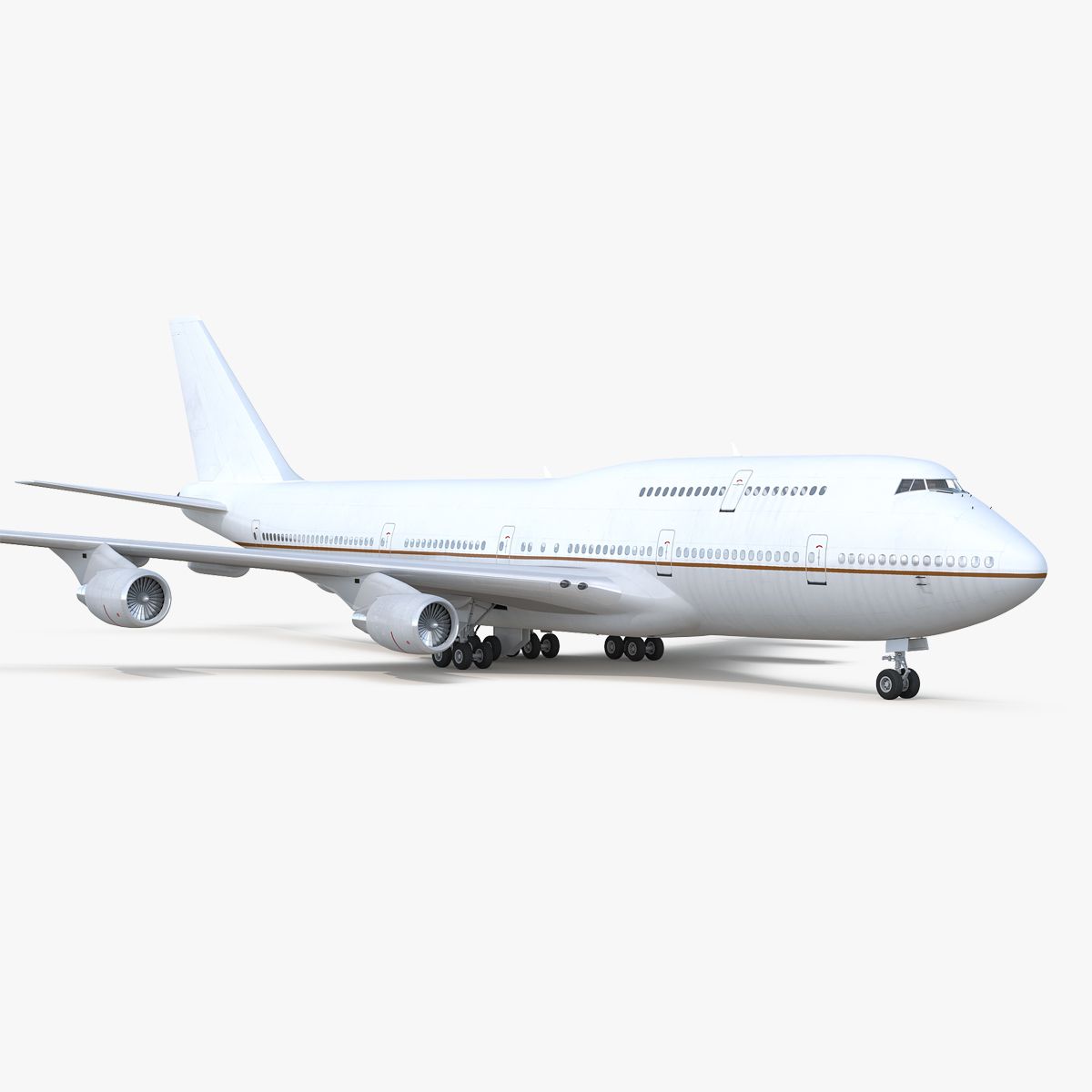

BOEING 747-400 JUMBO modelo 3d
0


Licencia Libre de DerechosSolo editorial
Devoluciones simples
Mejor precio garantizado
Trabaja fuera de la caja
0
visitas

Presentado por
TURBOSPAIN
Presupuesto
- Geometríapolygonal
- Poligonos111,000
- Vértices112,000
- TexturasNo
- AparejadoNo
- AnimadoNo
- Listo para imprimir en 3DNo
- Juego listo (polietileno baja)No
- Mapeado UVNo
- UV sin envolverunknown
Descripción
The Boeing 747-400 is a major development and the best-selling model of the Boeing 747 family of jet airliners. While retaining the four-engine wide-body layout of its predecessors, the 747-400 embodies numerous technological and structural changes to produce a more efficient airframe. Its most distinguishing features versus preceding 747 models are 6-foot (1.8 m) winglets mounted on 6-foot (1.8 m) wing tip extensions, which are found on all 747-400s except for Japanese domestic market versions.
The 747-400 is equipped with a two-crew glass cockpit, which dispenses with the need for a flight engineer, along with more fuel-efficient engines, a horizontal stabilizer fuel tank, and revised fuselage/wing fairings. The aircraft also features an all-new interior with upgraded in-flight entertainment architecture. As on the 747-300, passenger variants include a stretched upper deck as standard. The model has a maximum capacity of 660 passengers with the 747-400D variant,[5] and can fly non-stop for up to 7,670 nautical miles (14,200 km) with maximum payload, depending on model.
Northwest Airlines first placed the 747-400 in commercial service in February 9, 1989. The 747-400 was produced in passenger (-400), freighter (-400F), combi (-400M), domestic (-400D), extended range passenger (-400ER) and extended range freighter (-400ERF) versions. The 747-400 is the second-most recent version of the Boeing 747 aircraft family, having been superseded by the more economical and advanced Boeing 747-8. The last -400 model was delivered in December 2009
May 26, 2020
Fecha Agregada
Feb 13, 2022
última actualización
Opiniones
Actualmente no hay opiniones para este producto.
¿Por qué no ser el primero en romper el hielo?