


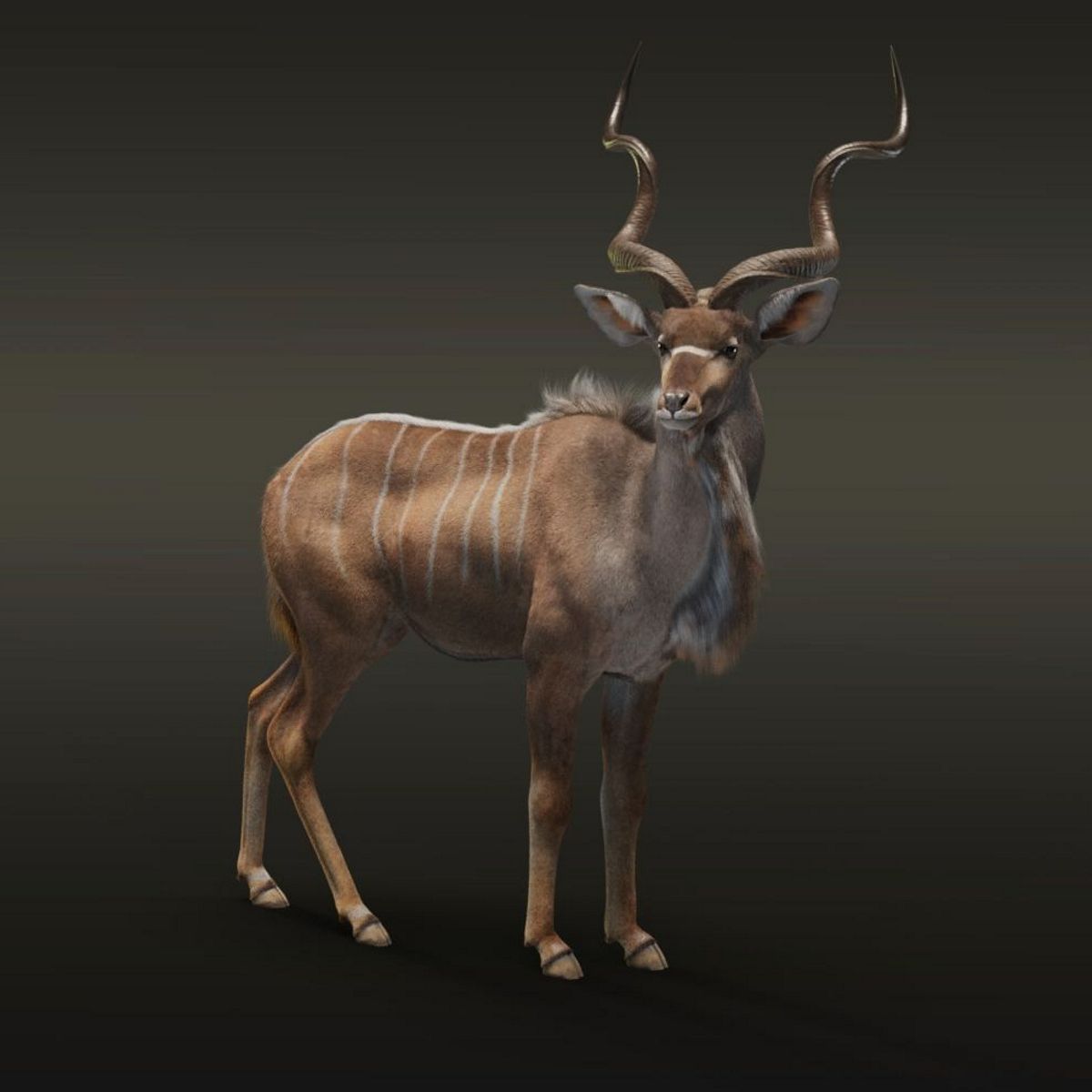
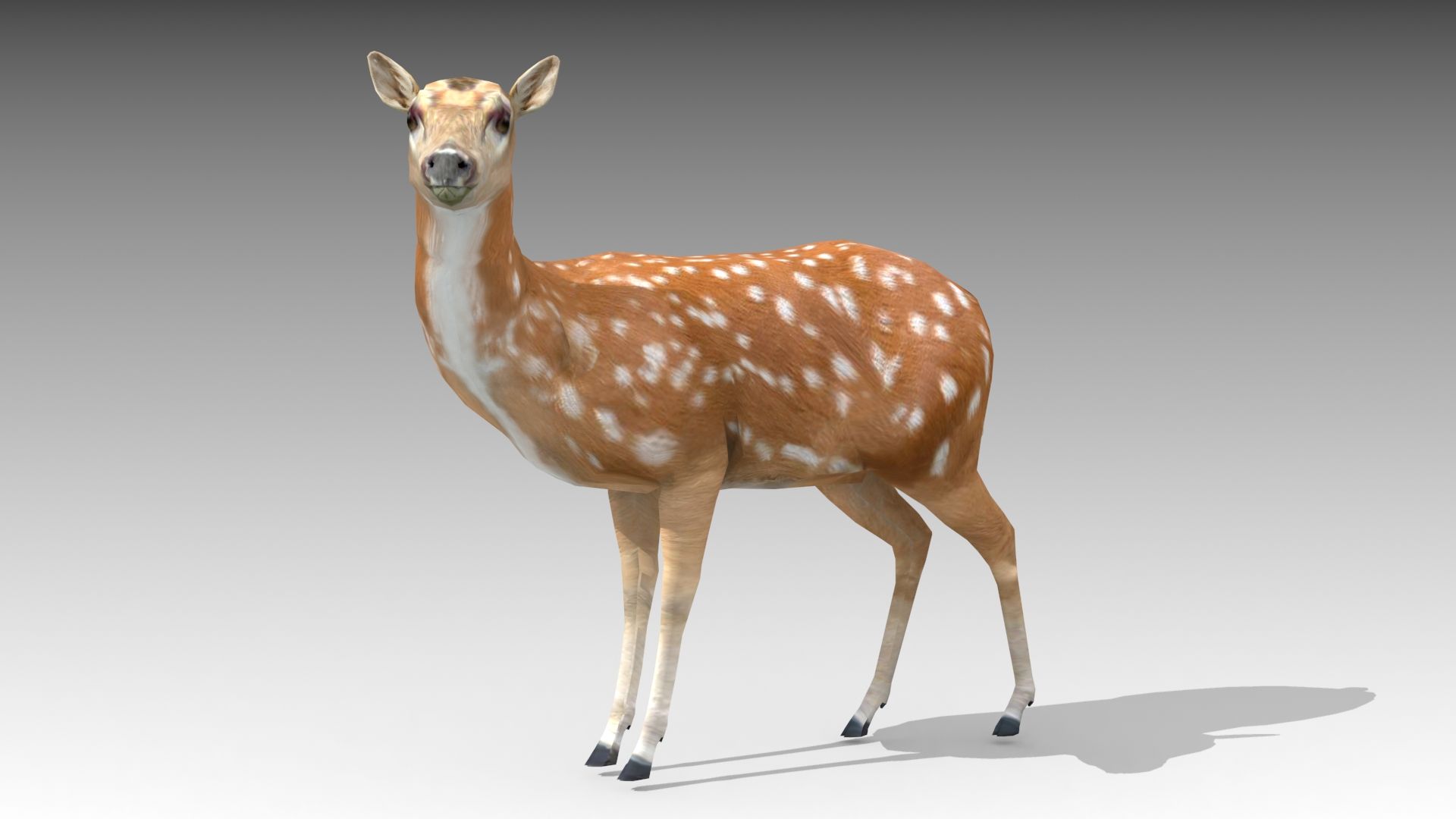


nyala modèle 3D
0


Licence Libre de DroitsToutes les utilisations prolongées
Retours simples
Garantie du meilleur prix
Fonctionne hors de la boîte
0
visites

Proposé par
vicmax
Caractéristiques
- Géométriepolygonal
- Des polygones4,000
- Sommets4,000
- Les texturesYes
- GrééNo
- AniméNo
- Prêt pour l'impression 3DNo
- Jeu Prêt (low poly)No
- UV mappéNo
- UV non emballésunknown
La description
The nyala (Nyala angasii or Tragelaphus angasii), also called inyala,[3] is a spiral-horned antelope native to southern Africa. It is a species of the family Bovidae and genus Nyala, also considered to be in the subgenus Tragelaphus. It was first described in 1849 by George French Angas. The body length is 135–195 cm (53–77 in), and it weighs 55–140 kg (120–310 lb). It exhibits the highest sexual dimorphism among the spiral-horned antelopes.
As a herbivore, nyala feeds upon foliage, fruits and grasses, with sufficient fresh water. A shy animal, it prefers water holes rather than open spaces. Nyala do not show signs of territoriality, and individual areas can overlap each other. Nyala are very cautious creatures. Old males live alone, but single sex or mixed family groups of up to 10 individuals can be found. These inhabit thickets within dense and dry savanna woodlands.
It's range includes Malawi, Mozambique, South Africa, Swaziland and Zimbabwe. Nyala has been introduced in Botswana and Namibia, and reintroduced in Swaziland, where it was extinct since the 1950s. Its population is stable and it has been listed as of Least Concern by the International Union for Conservation of Nature (IUCN).
Nov 12, 2021
date ajoutée
Nov 12, 2021
dernière mise à jour
Avis
Il n'y a actuellement aucun avis sur ce produit.
Pourquoi ne pas être le premier à briser la glace?