








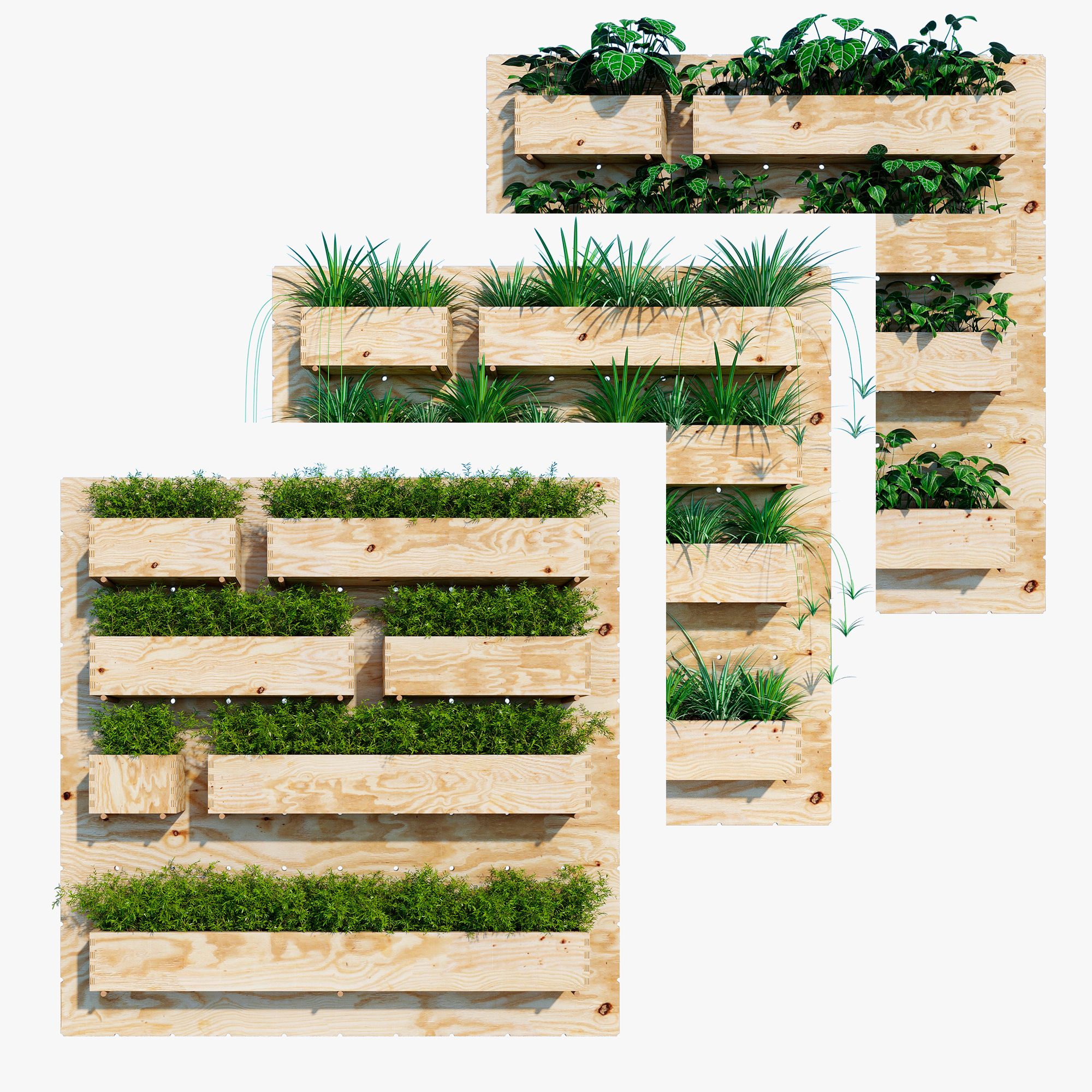


Chlorophytum comusum Modello 3D
0


Licenza RoyaltyTutti gli usi estesi
Ritorni semplici
Miglior prezzo garantito
Funziona fuori dalla scatola
622
visite

Inviato da
ppalhais
specificazioni
- Geometriapolygonal
- poligoni49,600
- vertici33,940
- TexturesYes
- riggedNo
- AnimatoNo
- Prontabile in 3DNo
- Gioco pronto (low poly)No
- UV mappatoNo
- UV non avvoltounknown
Descrizione
Note---Final images rendered with Mental Ray
Plant descripition:
Description
Possibly the most popular of all houseplants, spider plant is a grasslike, clump forming, evergreen perennial in the lily family. The leaves are linear, 8-16 in (20.3-40.6 cm) long and less than 1 in (2.5 cm) wide. Small white flowers are borne along outward arching wiry stalks. The flowers give rise to seed filled capsules about 1/3 in (0.8 cm) long. After blooming and fruiting, little tufts of leaves - baby spider plants - develop on the stalks. These little "spiders" take root wherever they touch the ground. A healthy, mature spider plant can form a clump 3 ft (0.9 m) tall and across, with wiry stems cascading out as much as 5 ft (1.5 m). The roots and rhizomes of the spider plant are fleshy and thickened, and serve as water storage organs for dry periods. The wild species has green leaves, but most cultivars are variegated. "Mandaianum" has a yellow stripe down the center of each leaf; "Variegatum" has white stripes on the margins of the leaves with green down the center; and "Vittatum" has recurved leaves with white central stripes.
Location
Chlorophytum comosum, the spider plant, comes originally from South Africa.
Culture
Spider plant is one of the easiest house plants to maintain. It thrives in bright light or shade; it is not particular about room temperature (as long as it doesn"t freeze); it tolerates dry or humid air; and even if you forget to water it for a while, it will forgive you. Spider plants may develop brown leaf tips if the soil is kept too dry or becomes too salty from watering with hard water. Prevent this by watering with rain water; cure it by leaching the roots thoroughly and repotting.
Light: Although it will survive in shady spots, spider plant does best in bright light. If you want maximum growth and production of flowers and little plantlets, keep your spider plant in a very bright window, or hang it outside on the porch (during frostfree weather). Avoid the midday full sun. If natural light is not available, provide at least 400 foot-candles of artificial light.
Moisture: During the summer, when in active growth, spider plant should be watered regularly: keep the soil moist. In winter, water sparingly, allowing the soil to dry out between waterings.
Hardiness: USDA Zones 8 - 11 . Spider plant does not tolerate frost, but can be grown in Zone 8 where if will be killed to the ground but quickly revives with the return of warmer temperatures. Indoors it is happy at normal room temperatures.
Propagation: The plantlets that develop on the elongated stalks can be rooted easily. The main root mass can be divided to make new plants. Spider plants seem to produce the most plantlets when they are slightly overcrowded in their pots, or "pot bound."
Nota --- Immagini finali rese con la descrizione di Mental Ray Plant: Descrizione Probabilmente la più popolare di tutte le piante d'appartamento, la pianta ragno è una pianta erbacea che si forma a grappolo, perenne sempreverde nella famiglia dei gigli. Le foglie sono lineari, lunghe 8-16 pollici (20.3-40.6 cm) e larghe meno di 1 pollice (2.5 cm). Piccoli fiori bianchi sono portati lungo gli steli gibbosi verso l'esterno. I fiori danno origine a capsule riempite di semi lunghe circa 1/3 in (0,8 cm). Dopo la fioritura e la fruttificazione, piccoli ciuffi di foglie - piante di ragno - si sviluppano sugli steli. Questi piccoli "ragni" mettono radici ovunque toccano terra. Una pianta ragno sana e matura può formare un ciuffo di 3 piedi (0,9 m) di altezza e di diametro opposto, con steli filiformi che cadono a cascata fino a 1,5 m (5 piedi). Le radici e i rizomi della pianta ragno sono carnosi e ispessiti e servono come organi di conservazione dell'acqua per periodi secchi. La specie selvatica ha foglie verdi, ma la maggior parte delle cultivar sono variegate. "Mandaianum" ha una striscia gialla al centro di ogni foglia; "Variegatum" ha strisce bianche ai margini delle foglie con il verde al centro; e "Vittatum" ha ricurvo foglie con strisce centrali bianche. Posizione Il Chlorophytum comosum, la pianta ragno, proviene originariamente dal Sudafrica. Cultura La pianta ragno è una delle piante da appartamento più facili da mantenere. Prospera in una luce o ombra brillante; non è particolare della temperatura ambiente (purché non si congeli), tollera l'aria secca o umida e, anche se si dimentica di annaffiare per un po ', ti perdonerà Le piante di ragno possono sviluppare punte di foglie marroni se il terreno è troppo asciutto o troppo salato per essere annaffiato con acqua dura, prevenendolo irrigando con acqua piovana, curandolo sciacquando a fondo le radici e rinvigorendo Luce: sebbene sopravviva in luoghi ombrosi, la pianta ragno fa meglio Se vuoi la crescita massima e la produzione di fiori e di piccole piantine, tieni la tua pianta ragno in una finestra molto luminosa, o appendila fuori sotto il portico (in caso di assenza di ghiaccio) Evita il pieno sole di mezzogiorno Se la luce naturale non è disponibile Fornire almeno 400 piedi di candele artificiali di luce Umidità: Durante l'estate, quando la crescita è attiva, la pianta ragno deve essere annaffiata regolarmente: mantenere il terreno umido, in inverno, con parsimonia, lasciando asciugare il terreno tra un'annaffiatura e l'altra. Hardiness: Zone USDA 8 - 11. La pianta ragno non tollera il gelo, ma può essere coltivata nella zona 8 dove, se viene uccisa a terra, riprende rapidamente con il ritorno delle temperature più calde. All'interno è felice a temperature ambiente normali. Propagazione: le piantine che si sviluppano sugli steli allungati possono essere facilmente radicate. La massa principale della radice può essere divisa per creare nuove piante. Le piante di ragno sembrano produrre la maggior parte delle piantine quando sono un po 'sovraffollate nei loro vasi, o "vasi legati".
Mar 01, 2018
Data aggiunta
Aug 31, 2021
ultimo aggiornamento
Recensioni
Al momento non ci sono commenti per questo prodotto.
Perché non essere il primo a rompere il ghiaccio?