


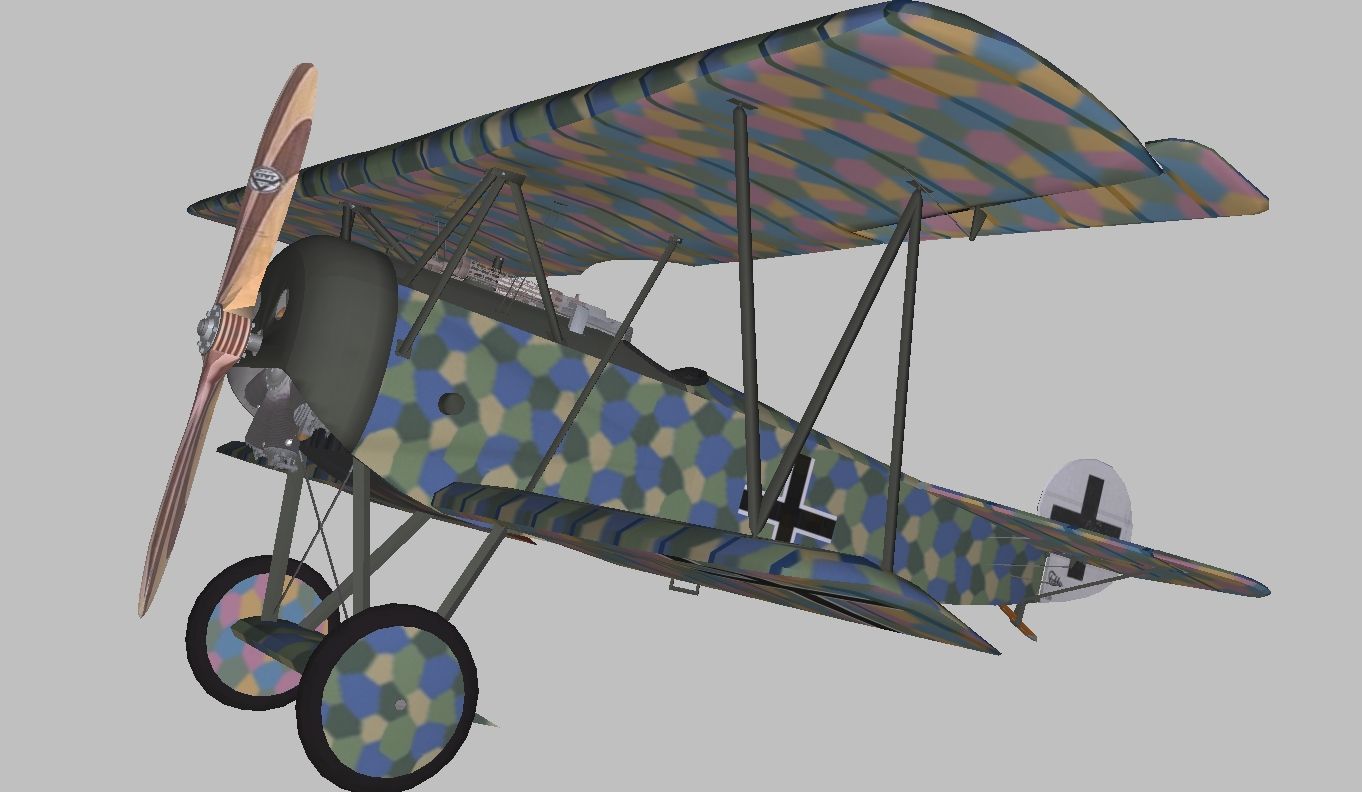

Fokker D7 Modello 3D
0


Licenza RoyaltySolo editoriale
Ritorni semplici
Miglior prezzo garantito
Funziona fuori dalla scatola
0
visite

Inviato da
John Longo
specificazioni
- Geometriapolygonal
- poligoni51,413
- vertici34,384
- TexturesYes
- riggedNo
- AnimatoNo
- Prontabile in 3DNo
- Gioco pronto (low poly)No
- UV mappatoYes
- UV non avvoltonon-overlapping
Descrizione
The Fokker D.VII was a German World War I fighter aircraft designed by Reinhold Platz of the Fokker-Flugzeugwerke. Germany produced around 3,300 D.VII aircraft in the second half of 1918. In service with the Luftstreitkrfte, the D.VII quickly proved itself to be a formidable aircraft. The Armistice ending the war specifically required Germany to surrender all D.VIIs to the Allies. Surviving aircraft saw continued widespread service with many other countries in the years after World War I.
This 3D model of the Fokker D7 can be put into games as the last two photos show this 3D model in a game.
Dec 21, 2019
Data aggiunta
Mar 10, 2022
ultimo aggiornamento
Recensioni
Al momento non ci sono commenti per questo prodotto.
Perché non essere il primo a rompere il ghiaccio?