


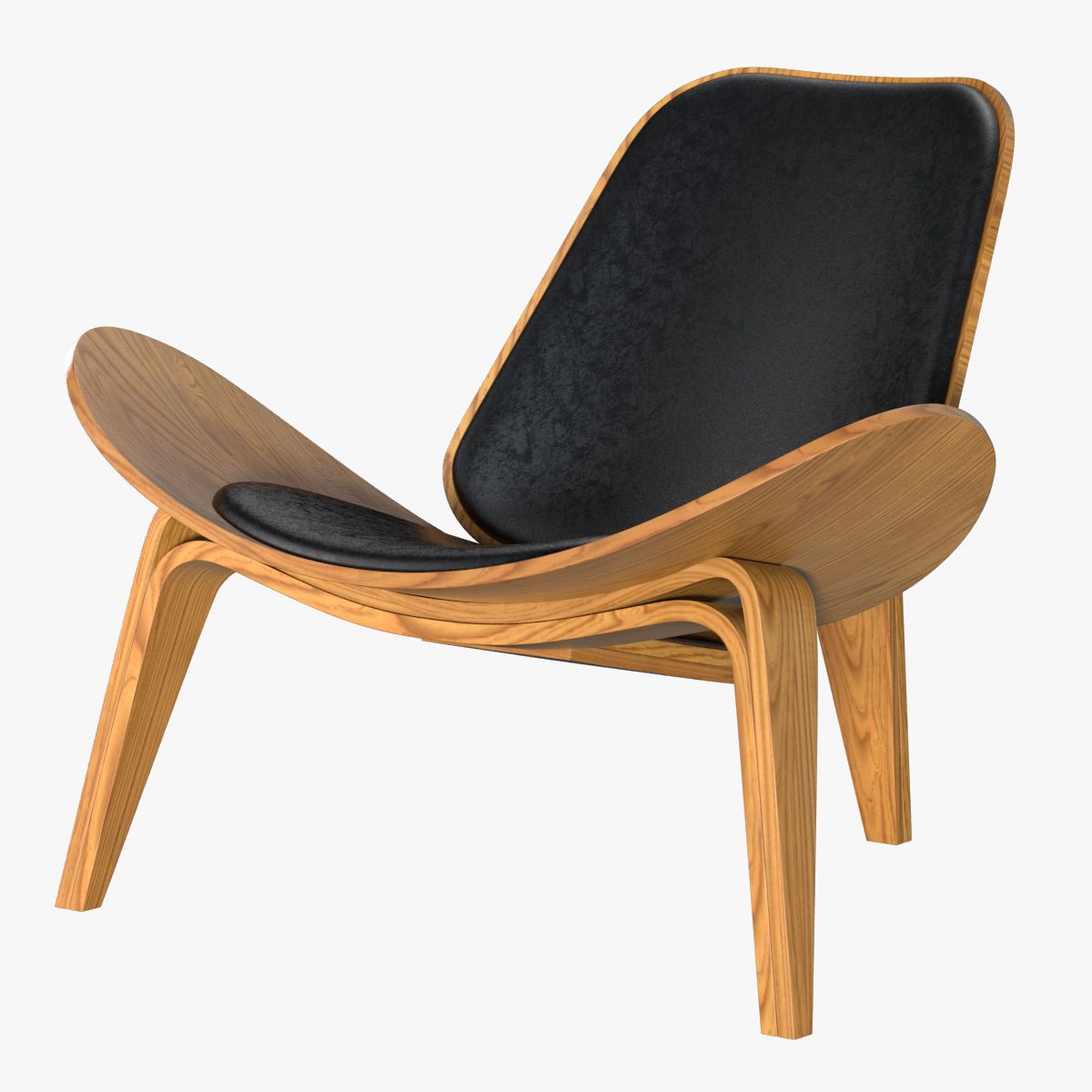


Hans Wegner Ch25 Easy Chair Modello 3D
1


Licenza RoyaltySolo editoriale
Ritorni semplici
Miglior prezzo garantito
Funziona fuori dalla scatola
1,017
visite

Inviato da
2in1studio
specificazioni
- Geometriapolygonal_quads/tris
- poligoni42,128
- vertici22,285
- TexturesYes
- riggedNo
- AnimatoNo
- Prontabile in 3DNo
- Gioco pronto (low poly)No
- UV mappatoYes
- UV non avvoltonon-overlapping
Descrizione
modeled in 3ds max 2009, available in 3ds max, 3ds max Vray, c4d, fbx, maya,3ds and obj format
______________________________________________
ch25 chair
Design Hans Wegner, 1949
The special profile of the forelegs is probably this chair"s most characteristic feature. Their unusual shape make them carry most of the user"s weight and serve as a stable support for the armrests at the same time. Another interesting detail is the hind legs, which flush with the rail. The rope weaving of the seat and back form a distinctive pattern. The broad armrests add to the comfort of the chair and make it easy to get up from, even with its low seat height and reclining back. The moderate dimensions fit easily into interiors where space is a factor. The simple choice of materials give it a neutral appearance that make it blend in well.
Hans J Wegner trained as a cabinet-maker before attending the Copenhagen School of Arts and Crafts, where he later lectured from 1946 to 1953. From 1938 to 1942, he worked as a furniture designer in Arne Jacobsen and Erik Moller´s architectural practice. In 1943, he set up his own office in Gentofte and collaborated with Borge Mogensen in the design of an apartment shown at the 1946 Cabinetmakers´ Exhibition in Copenhagen. Throughout his long career, he has designed furniture extensively for Johannes Hansen and Fritz Hansen. The Royal Society of Arts, London made him an "Honorary Royal Designers for Industry" in 1959.
28.7" h | 28.7" d | 28" w | seat: 13.8" h
modellato in 3ds max 2009, disponibile in 3ds max, 3ds max Vray, c4d, fbx, maya, 3ds e formato obj ______________________________________________ sedia ch25 Design Hans Wegner, 1949 Il profilo speciale degli arti anteriori è probabilmente la caratteristica più caratteristica di questa sedia. la forma insolita li fa trasportare la maggior parte del peso dell'utente e allo stesso tempo fornisce un supporto stabile per i braccioli. Un altro dettaglio interessante sono le zampe posteriori, che si allineano con il binario. La tessitura della corda del sedile e dello schienale forma uno schema distintivo. Gli ampi braccioli aumentano il comfort della sedia e facilitano l'alzata, anche con la sua altezza bassa della seduta e lo schienale reclinabile. Le dimensioni moderate si adattano facilmente agli interni in cui lo spazio è un fattore. La semplice scelta dei materiali gli conferisce un aspetto neutro che lo fa fondere bene. Hans J Wegner si formò come falegname prima di frequentare la Scuola di Arti e Mestieri di Copenaghen, dove insegnò successivamente dal 1946 al 1953. Dal 1938 al 1942, ha lavorato come designer di mobili nello studio di architettura di Arne Jacobsen ed Erik Moller. Nel 1943, fondò il proprio ufficio a Gentofte e collaborò con Borge Mogensen nella progettazione di un appartamento esposto alla Mostra degli Armatori del 1946 a Copenaghen. Nel corso della sua lunga carriera, ha progettato estensivamente mobili per Johannes Hansen e Fritz Hansen. La Royal Society of Arts di Londra lo ha nominato "Royal Designers onorario per l'industria" nel 1959. 28.7 "h | 28.7" d | 28 "con sedile: 13,8" h
Sep 24, 2018
Data aggiunta
Jan 27, 2022
ultimo aggiornamento
Recensioni
Al momento non ci sono commenti per questo prodotto.
Perché non essere il primo a rompere il ghiaccio?