
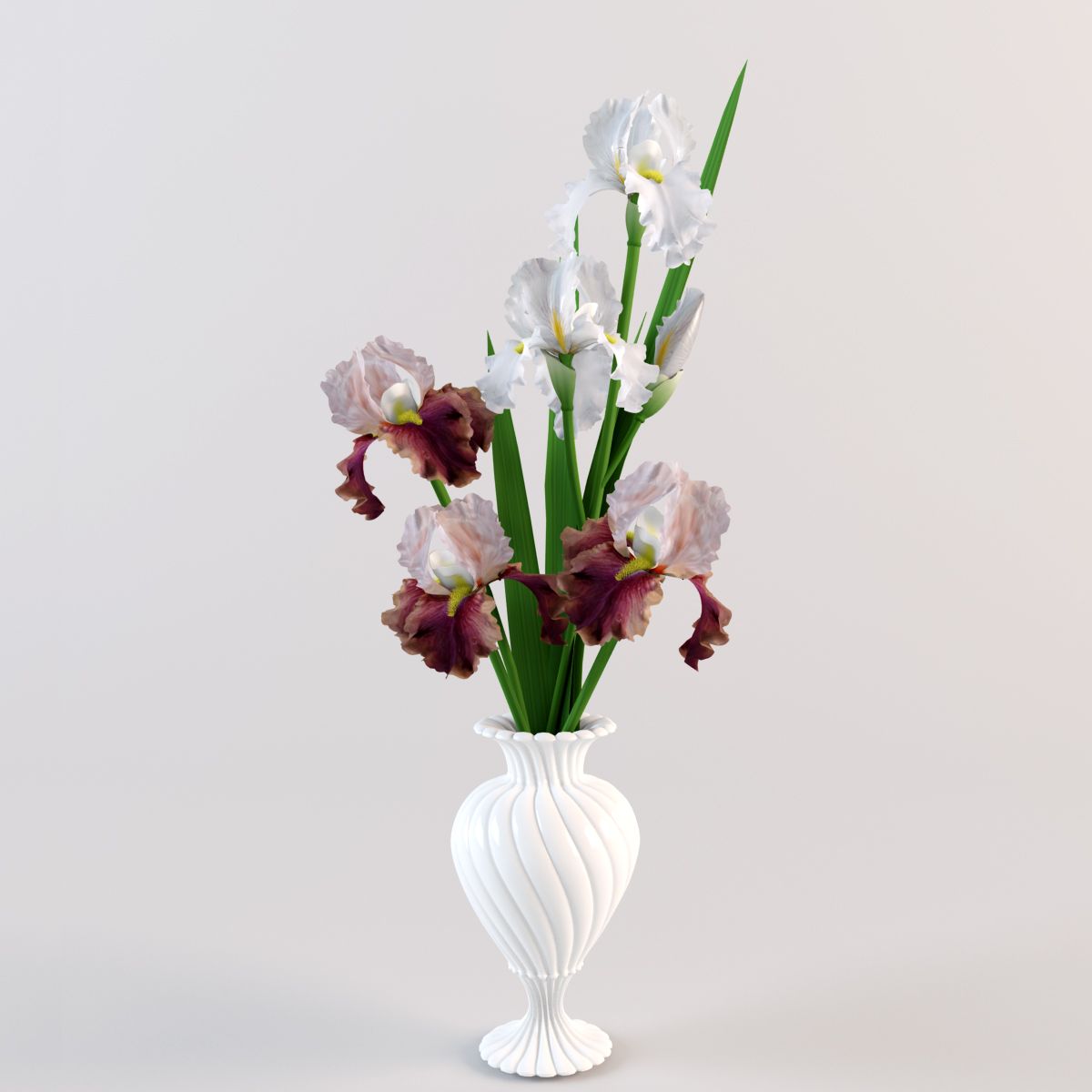


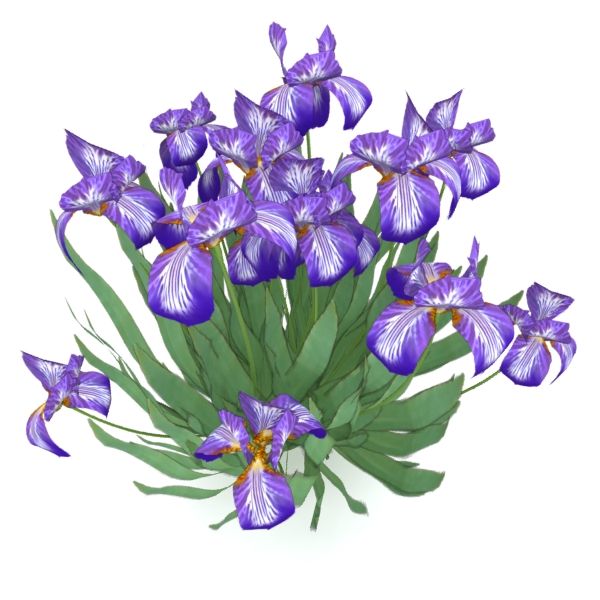
Iris germanica Modello 3D
0


Licenza RoyaltyTutti gli usi estesi
Ritorni semplici
Miglior prezzo garantito
Funziona fuori dalla scatola
560
visite

Inviato da
ppalhais
specificazioni
- Geometriapolygonal
- poligoni39,300
- vertici45,000
- TexturesYes
- riggedNo
- AnimatoNo
- Prontabile in 3DNo
- Gioco pronto (low poly)No
- UV mappatoNo
- UV non avvoltounknown
Descrizione
Iris germanica is believed to be the ancestor of many, if not most, of the modern bearded irises that are so popular with gardeners the world over. German iris has typical iris flowers. Each is composed of six perianth segments: three outer sepals called "falls", alternating with three inner petals, called "standards." Each sepal is bedecked with a tuft of hairs down its inner midline: the "beard." The beard hairs are usually white with yellow tips. The flowers are pleasantly fragrant and come with white, purple, yellow or blue perianth segments. There can be as many as half a dozen flowers on a stalk. The flowering stalk may stand up to 3 ft (1 m) tall. The sword shaped leaves are mostly basal, in two ranks, and about 2 ft (60 cm) long. German iris spreads by rhizomes; it does not produce a bulb. German iris is a widely cultivated plant and hundreds (thousands?) of hybrids and cultivars are available. These plants vary greatly in size and flower color. For a list of some cultivars, see the Michigan State University Iris germanica web page. The botanical name for German iris, including hybrids, is sometimes given as Iris X germanica, pronounced "Iris, the hybrid species germanica."
Location
Iris germanica is probably native to southern Europe and the Mediterranean region, but it has become established all over the temperate world and can be found growing on road shoulders and old home sites throughout much of the U.S. and Europe.
Culture
German iris is very easy to grow in most any soil type. The rhizomes seem to like a warm soil, so don't mulch.
Light: German iris will do best with full sun in the morning, but can tolerate light, dappled shade.
Moisture: Provide ample water during establishment. Once established, irises need little care.
Hardiness: USDA Zones 4-10.
Propagation: The creeping underground stems (rhizomes) spread rapidly and German iris soon forms a large clump. Pieces of rhizome can be broken off for replanting. Plant rhizomes shallowly, barely covered with soil. Plant them too deep and leaves will emerge, but the plant will not produce flowers.
'Painted Cloud' bearded iris is one of hundreds of hybrids, cultivars and varieties - I have about six others that I hope will bloom soon so I can take photographs for this profile ( click to download a large version of this image). The ordinary blue pass-along iris I grew as a kid were nice but some of these newer ones are incredible - and just as easy to grow. - JackUsage
Irises are used in mass in flower beds and in borders. Allow German irises to spread in a lightly shaded wooded area in the back of the garden. The cultivar 'Florentina' (or variety florentina, depending on which expert you follow), has white flowers and its dried and ground rhizomes, called orris, are used in fine perfumes.
Features
The more than 200 species of irises, named for the Greek goddess of the rainbow, are divided into two major groups: bulbous and rhizomatous. The rhizomatous irises are divided into bearded, beardless and crested. The latter have a raised crest on the sepals instead of a beard.
WARNING
All parts of irises can cause severe discomfort if ingested. The sap may irritate the skin of some people.
Si crede che l'iris germanica sia l'antenata di molti, se non la maggior parte, delle moderne iridi barbute che sono così popolari tra i giardinieri di tutto il mondo. L'iris tedesco ha i tipici fiori di iris. Ognuno è composto da sei segmenti di perianzio: tre sepali esterni chiamati "cadute", alternati a tre petali interni, chiamati "standard". Ogni sepalo è ornato da un ciuffo di peli lungo la linea mediana interna: la "barba". I peli della barba sono generalmente bianchi con punte gialle. I fiori sono piacevolmente profumati e vengono con segmenti di perianzio bianco, viola, giallo o blu. Ci possono essere una mezza dozzina di fiori su un gambo. Il gambo in fiore può reggere fino a 1 piedi di altezza. Le foglie a forma di spada sono per lo più basali, in due file, e lunghe circa 2 piedi (60 cm). L'iris tedesca si diffonde dai rizomi; non produce una lampadina. L'iris tedesco è una pianta ampiamente coltivata e sono disponibili centinaia (migliaia?) Di ibridi e cultivar. Queste piante variano notevolmente per dimensioni e colore dei fiori. Per un elenco di alcune cultivar, consultare la pagina web della Michigan State University Iris germanica. Il nome botanico dell'iride tedesca, inclusi gli ibridi, è talvolta dato come Iris X germanica, pronunciata come "Iris, la specie ibrida germanica". Posizione L'Iris germanica è probabilmente originaria dell'Europa meridionale e del bacino del Mediterraneo, ma si è affermata in tutto il mondo temperato e si può trovare in crescita su strade e vecchi siti di origine in gran parte degli Stati Uniti e dell'Europa. Cultura L'iris tedesco è molto facile da coltivare nella maggior parte dei tipi di suolo. I rizomi sembrano gradire un terreno caldo, quindi non pacciamare. Luce: l'iride tedesca farà meglio con il pieno sole al mattino, ma può tollerare l'ombra chiara e screziata. Umidità: fornire abbondante acqua durante lo stabilimento. Una volta stabilito, le iridi necessitano di poca cura. Resistenza: zone USDA 4-10. Propagazione: I gambi sotterranei striscianti (rizomi) si diffondono rapidamente e l'iride tedesca forma presto un grosso ciuffo. Pezzi di rizoma possono essere staccati per il reimpianto. Pianta i rizomi superficialmente, appena coperti di terra. Piantali troppo in profondità e le foglie emergeranno, ma la pianta non produrrà fiori. L'iride barbuta 'Painted Cloud' è una delle centinaia di ibridi, cultivar e varietà - ne ho circa altre sei che spero fioriranno presto, così posso scattare fotografie per questo profilo (clicca per scaricare una versione ingrandita di questa immagine). L'iride blu pass-along ordinaria che sono cresciuto da bambino era carina ma alcuni di questi più nuovi sono incredibili - e altrettanto facili da coltivare. - JackUsage Irises viene utilizzato in massa nelle aiuole e nei bordi. Permetti alle iridi tedesche di diffondersi in una zona boschiva leggermente ombreggiata sul retro del giardino. La cultivar 'Florentina' (o varietà florentina, a seconda dell'esperto che segui), ha fiori bianchi e i suoi rizomi essiccati e macinati, chiamati gergo, sono usati in profumi raffinati. Caratteristiche Le oltre 200 specie di iris, denominate per la dea greca dell'arcobaleno, sono divise in due gruppi principali: bulboso e rizomatoso. Le iris rizomatose sono divise in barba, senza barba e crestato. Questi ultimi hanno una cresta rialzata sui sepali invece che sulla barba. AVVERTENZA Tutte le parti di iris possono causare gravi disagi se ingerite. La linfa può irritare la pelle di alcune persone.
Sep 25, 2018
Data aggiunta
Jan 29, 2022
ultimo aggiornamento
Recensioni
Al momento non ci sono commenti per questo prodotto.
Perché non essere il primo a rompere il ghiaccio?