




T37A carro armato leggero anfibio Modello 3D
42



Licenza d'uso personale
7,787
visite
900
download

Inviato da
leonmetalowiec
specificazioni
- GeometriaPolygon Mesh
- poligoni0
- vertici0
- TexturesNo
- materialeNo
- riggedNo
- AnimatoNo
- Prontabile in 3DNo
- Gioco pronto (low poly)No
- UV mappatoNo
- UV non avvoltoUnknown
Descrizione
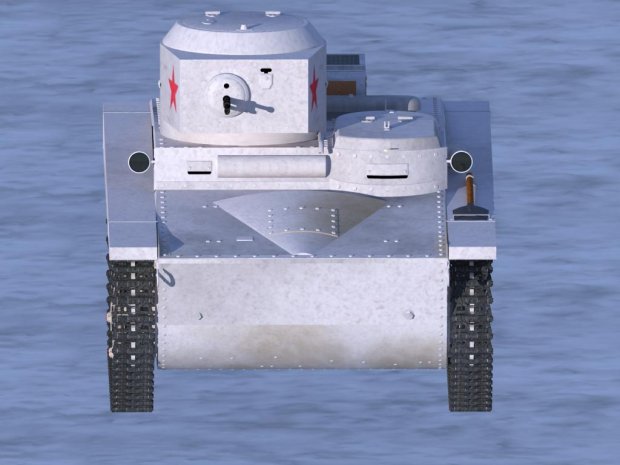
Soviet light amphibious tank T37A in painting from the period of the Winter War.
Renders simple and without post-production, as someone I want to play in a professional I encourage you!
The T-37A was a Soviet amphibious light tank. The tank is often referred to as the T-37, although that designation was used by a different tank which never left the prototype stage.The T-37A was the first series of mass-produced fully amphibious tanks in the world.
The tank was first created in 1932, based on the British Vickers tankette and other operational amphibious tanks. The tank was mass-produced starting in 1933 up until 1936, when it was replaced with the more modern T-38, based on the T-37A. Overall, after four years of production, 2552 T-37A’s were produced, including the original prototypes.
In the Red Army, they were used to perform tasks in communication, reconnaissance, and as defense units on the march, as well as active infantry support on the battlefield. The T-37A were used in large numbers during the Soviet invasion of Poland and in the Winter War against Finland. The T-37 A was also used by the Soviets in the beginning of the Great Patriotic War, but most of them were quickly lost. Surviving tanks of that type fought on the front lines until 1944, and were used in training and auxiliary defense until the end of World War II
Renders simple and without post-production, as someone I want to play in a professional I encourage you!
The T-37A was a Soviet amphibious light tank. The tank is often referred to as the T-37, although that designation was used by a different tank which never left the prototype stage.The T-37A was the first series of mass-produced fully amphibious tanks in the world.
The tank was first created in 1932, based on the British Vickers tankette and other operational amphibious tanks. The tank was mass-produced starting in 1933 up until 1936, when it was replaced with the more modern T-38, based on the T-37A. Overall, after four years of production, 2552 T-37A’s were produced, including the original prototypes.
In the Red Army, they were used to perform tasks in communication, reconnaissance, and as defense units on the march, as well as active infantry support on the battlefield. The T-37A were used in large numbers during the Soviet invasion of Poland and in the Winter War against Finland. The T-37 A was also used by the Soviets in the beginning of the Great Patriotic War, but most of them were quickly lost. Surviving tanks of that type fought on the front lines until 1944, and were used in training and auxiliary defense until the end of World War II
Carro anfibio leggero sovietico T37A nella pittura del periodo della Guerra d'Inverno.
Rende semplici e senza post-produzione, come qualcuno che voglio giocare in un professionista ti incoraggio!
Il T-37A era un carro armato leggero anfibio sovietico. Il serbatoio è spesso definito come il T-37, sebbene tale designazione sia stata utilizzata da un serbatoio diverso che non ha mai lasciato il prototipo. Il T-37A è stata la prima serie di carri armati completamente anfibie prodotte in serie nel mondo.
Il carro fu creato per la prima volta nel 1932, sulla base della tankette britannica Vickers e di altri carri armati anfibi operativi. Il serbatoio fu prodotto in serie a partire dal 1933 fino al 1936, quando fu sostituito dal più moderno T-38, basato sul T-37A. Nel complesso, dopo quattro anni di produzione, sono stati prodotti 2552 T-37A, inclusi i prototipi originali.
Nell'Armata Rossa erano abituati a svolgere compiti di comunicazione, ricognizione e unità di difesa in marcia, oltre al supporto attivo di fanteria sul campo di battaglia. I T-37A furono utilizzati in gran numero durante l'invasione sovietica della Polonia e nella Guerra d'Inverno contro la Finlandia. Il T-37 A fu usato anche dai sovietici all'inizio della Grande Guerra Patriottica, ma la maggior parte di loro fu rapidamente persa. Carri armati sopravvissuti di quel tipo combatterono in prima linea fino al 1944, e furono usati nell'addestramento e nella difesa ausiliaria fino alla fine della Seconda Guerra Mondiale
Rende semplici e senza post-produzione, come qualcuno che voglio giocare in un professionista ti incoraggio!
Il T-37A era un carro armato leggero anfibio sovietico. Il serbatoio è spesso definito come il T-37, sebbene tale designazione sia stata utilizzata da un serbatoio diverso che non ha mai lasciato il prototipo. Il T-37A è stata la prima serie di carri armati completamente anfibie prodotte in serie nel mondo.
Il carro fu creato per la prima volta nel 1932, sulla base della tankette britannica Vickers e di altri carri armati anfibi operativi. Il serbatoio fu prodotto in serie a partire dal 1933 fino al 1936, quando fu sostituito dal più moderno T-38, basato sul T-37A. Nel complesso, dopo quattro anni di produzione, sono stati prodotti 2552 T-37A, inclusi i prototipi originali.
Nell'Armata Rossa erano abituati a svolgere compiti di comunicazione, ricognizione e unità di difesa in marcia, oltre al supporto attivo di fanteria sul campo di battaglia. I T-37A furono utilizzati in gran numero durante l'invasione sovietica della Polonia e nella Guerra d'Inverno contro la Finlandia. Il T-37 A fu usato anche dai sovietici all'inizio della Grande Guerra Patriottica, ma la maggior parte di loro fu rapidamente persa. Carri armati sopravvissuti di quel tipo combatterono in prima linea fino al 1944, e furono usati nell'addestramento e nella difesa ausiliaria fino alla fine della Seconda Guerra Mondiale
Oct 19, 2014
Data aggiunta
Nov 19, 2019
ultimo aggiornamento
Commenti
Al momento non ci sono commenti per questo modello.
Puoi aggiungere il primo.