



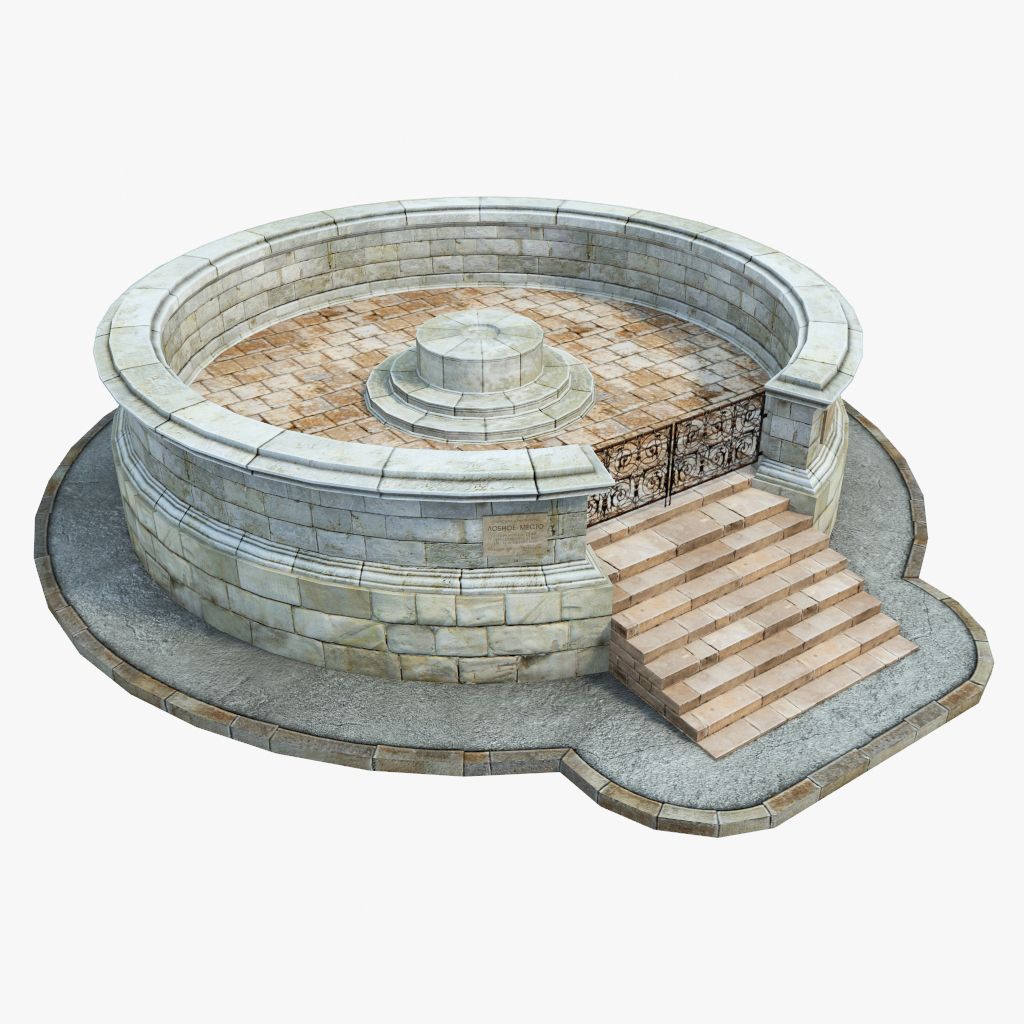
処刑場所 3Dモデル
0


12
訪問

から提出された
BSKer
仕様
- ジオメトリpolygonal_quads/tris
- 多角形1,174
- 頂点1,695
- テクスチャYes
- 堅いNo
- アニメ化No
- 3Dプリント可能No
- ゲームレディ(低ポリ)No
- UVマップYes
- ラップされていないUVmixed
説明
Lobnoye mesto, also known as the Place of Skulls,[1] is a 13-meter-long stone platform situated on Red Square in Moscow in front of Saint Basil's Cathedral.
Its name is derived from the Russian words for "forehead" (lob) and "place" (mesto). In old Russian lob meant a steep river bank. The platform, believed to have been constructed in brick in the 1530s, was first mentioned in 1547, when Ivan the Terrible addressed the Muscovites from there. Subsequently, it was primarily used for announcing the tsar's ukazes and for religious ceremonies. Despite a common misconception, the circular platform itself was never a place for executions.[1] Sometimes scaffolds were placed by it, but usually public executions were carried out at Vasilevsky Spusk behind St. Basil's Cathedral.
In Tsarist Russia, during Holy Week, the Palm Sunday procession called "donkey walk" would end at the Lobnoye Mesto where a depiction of Calvary had been erected. The Tsar himself, on foot to show humility, would lead the Patriarch of Moscow, who was seated on a donkey, in a procession from the city gates to Red Square.
The nearby Monument to Minin and Pozharsky commemorates the events of 1612, when Prince Pozharsky ascended the Lobnoye Mesto to pronounce Moscow free from Polish occupation. In 1786, the architect Matvei Kazakov had the Lobnoye Mesto rebuilt in white stone, while keeping its original location and proportions.
Oct 27, 2019
追加日
Feb 20, 2022
最後の更新
レビュー
この商品のレビューはまだありません。
氷を砕いた最初の人になろう。