



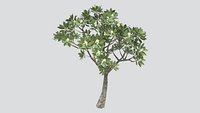



Agave attenuata 3d model
0


Royalty-vrije LicentieAlle uitgebreide toepassingen
Eenvoudig rendement
Beste prijsgarantie
Werkt uit de doos
552
bezoeken

Ingezonden door
ppalhais
bestek
- Geometriepolygonal
- polygonen41,970
- hoekpunten0
- texturesYes
- opgetuigdNo
- AnimatedNo
- Geschikt voor 3D-afdrukNo
- Game Ready (laag poly)No
- UV-gemappedNo
- Onverpakte UV'sunknown
Omschrijving
Agave attenuata
Scientific name: Agave attenuata
Common name: Fox tail agave
Origin: Mexico
Uses: border; edging; mass planting
Description:
Agave attenuata is a species of agave sometimes known as the "lion"s tail", "swan"s neck", or "foxtail" for its development of a curved stem, unusual among agaves. Native to the plateau of central Mexico, as one of the unarmed agaves, it is popular as an ornamental plant in gardens.
The stems typically range from 50-150 cm in length, and eventually old leaves fall off, leaving them naked and visible. The leaves are ovate-accuminate, 50-70 cm long and 12-16 cm, pale in color, ranging from a light gray to a light yellowish green. There are no teeth, nor terminal spines, although the leaves taper to points that fray with age. The inflorescence is a dense raceme 2.5 to 3 meters high, with greenish-yellow flowers.
The original specimens were sent to Kew by the explorer Galeotti in 1834, from an unspecified location in central Mexico. More recent study has reported it from Jalisco east to Mexico, in small colonies at elevations of 1,900 to 2,500 meters, but there have been few sightings, suggesting this agave is rare in the wild
Sep 17, 2018
Datum toegevoegd
Feb 08, 2022
laatste update
beoordelingen
absolutely horrible