





Asteroida 1.1 Model 3D
0


Licencja bezpłatnaWszystkie rozszerzone zastosowania
Proste zwroty
Gwarancja najlepszej ceny
Działa po wyjęciu z pudełka
0
Odwiedziny

Przesłane przez
dan2int
Specyfikacje
- Geometriapolygonal_quads/tris
- Wieloboki21,317
- Wierzchołki18,434
- TeksturyYes
- RiggedNo
- OżywionyNo
- Gotowy do druku 3DNo
- Game Ready (low poly)No
- Mapowanie UVYes
- Nieopakowane UVmixed
Opis
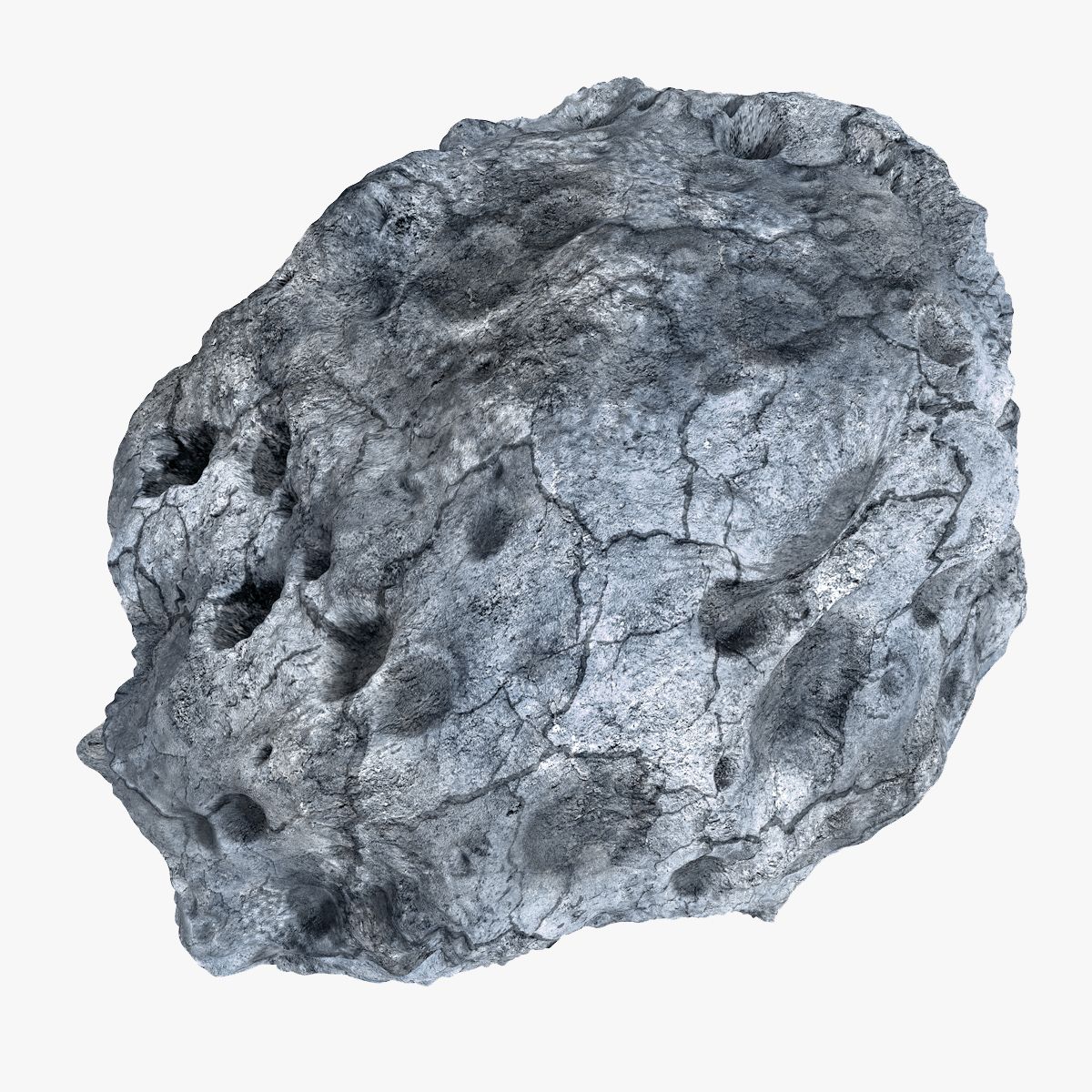
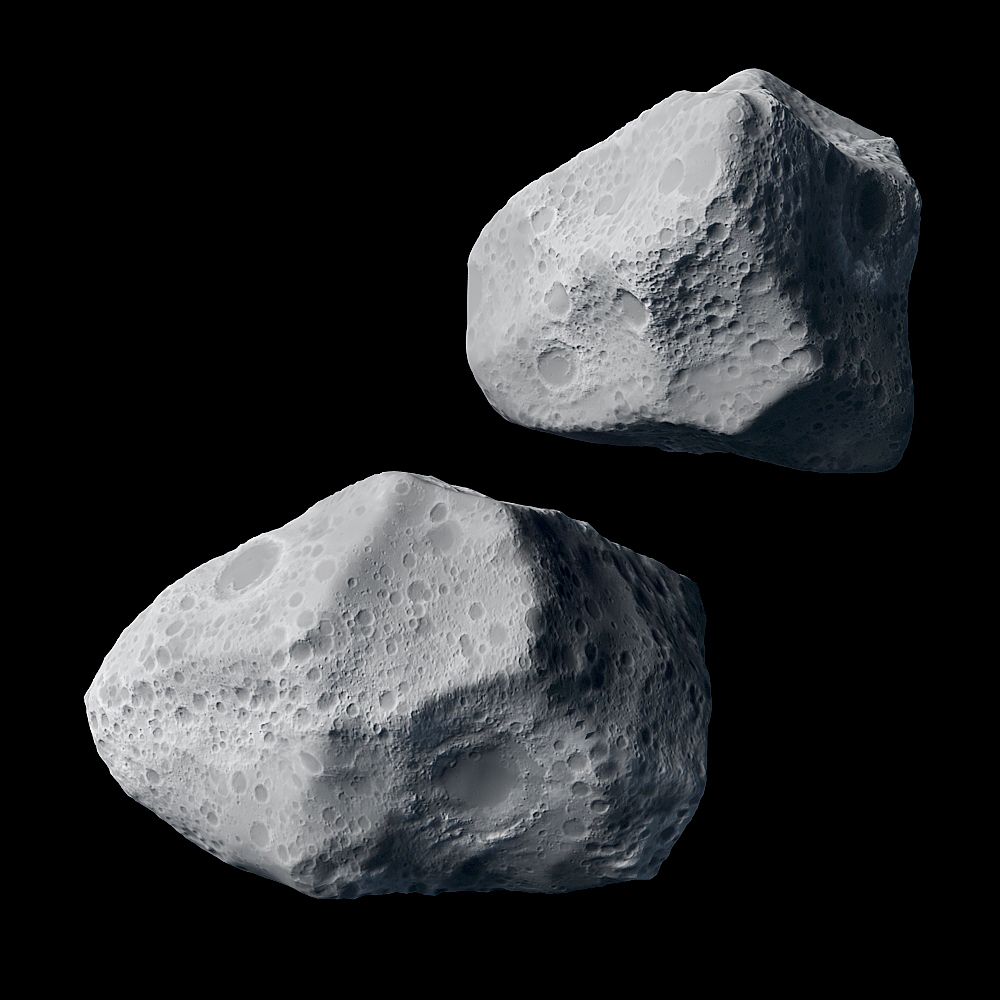
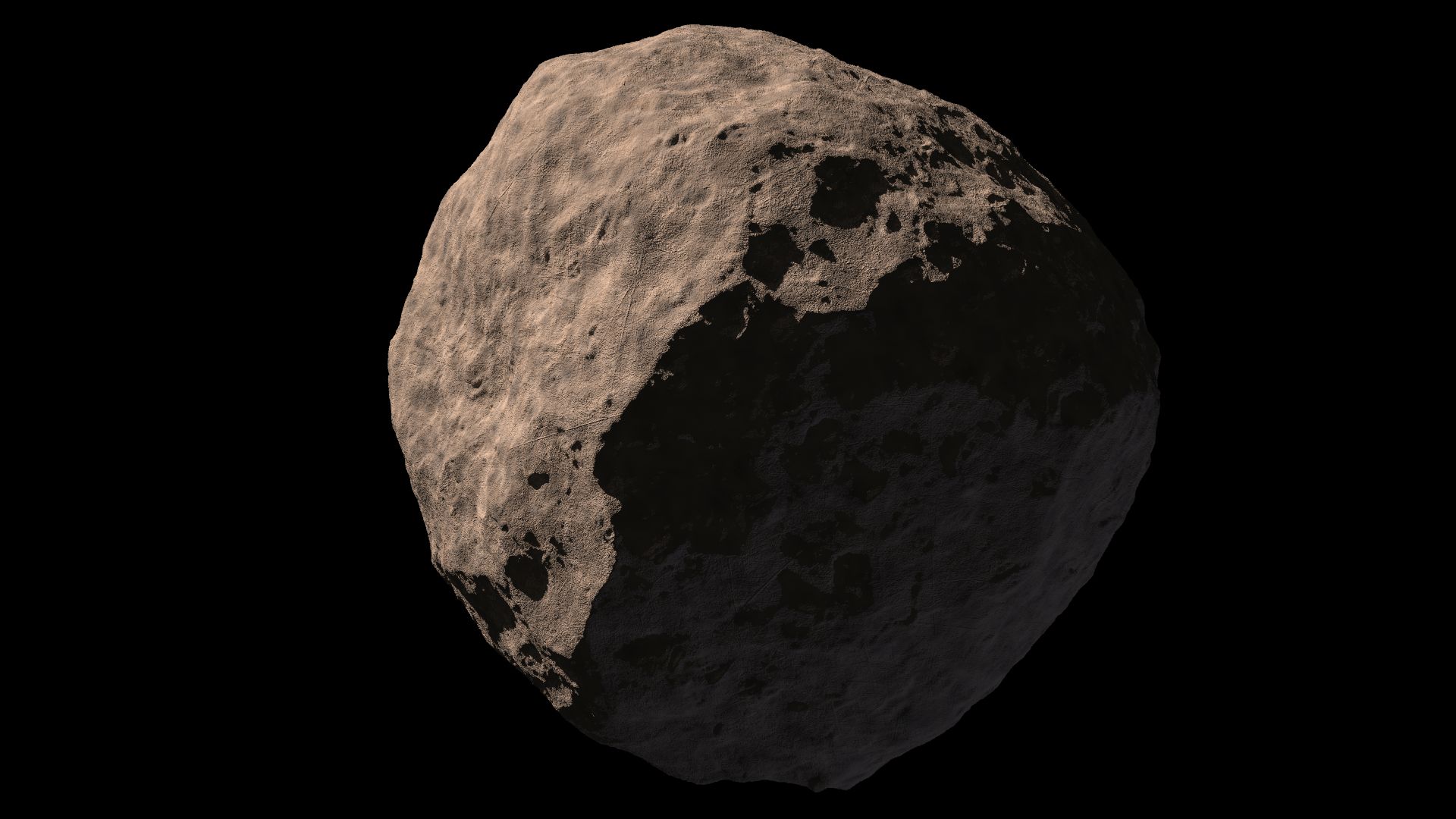
Asteroid 1.1
=========
3D model of a ficticious asteroid. The natural looking surface mesh of the asteroid is formed by an recursive subdivision method, which is loosly based on the fractal terrain generation approach by Martz [1] or Miller [2]. Larger craters are done by a sophisticated algorithm using MeshLab (Cigoni et.al. [3]). For smaller craters, detailed bump maps are used.
The mesh consists of quite evenly distributed tri- and quadrangles. No fancy program specific modifiers are used to maintain portability. The polygon count is just high enough for providing both close up shots and low enough for a large amount of instances.
A highly realistic look of the smaller craters is provided by the use of very high polygon models representing common impact crater cross sections and height map generation.
Modeled in Blender and Meshlab. Rendered in Blender 2.78c. The native Blender file comes with the full render setup.
Included Texture(s):
---------------------------
- diffuse.png (2000 x 2000 pixels)
- bump.png (2000 x 2000 pixels)
Features and Remarks:
-------------------------------
- Tools for Modeling: Combination of Blender (version 2.78c) and MeshLab (version 1.3.2_64bit)
- Recursive Subdivision method was implemented in Blender as a python addon
- Tri- and quadrangle mesh topology
- Native scene format is Blender (.blend)
- Rendered in Blender render engine (version 2.78c)
- Colored lighting setup is include
- UV-mapped: Connected UVs (UV-islands) don't overlap and don't fold. UV-islands share included texture maps. UV islands are layered with respect to the texture maps.
References
==========
[1] Paul Martz. Generating random fractal terrain. Accessed: 2017-11-23.
[2] Gavin SP Miller. The definition and rendering of terrain maps. *SIGGRAPH Comput. Graph.*, 20(4):39--48, August 1986.
[3] Paolo Cignoni, Marco Callieri, Massimiliano Corsini, Matteo Dellepiane, Fabio Ganovelli, and Guido Ranzuglia. MeshLab: an Open-Source Mesh Processing Tool. In Vittorio Scarano, RosarioDe Chiara, and Ugo Erra, editors, *Eurographics Italian Chapter Conference*. The Eurographics Association, 2008.
May 25, 2020
Data dodania
Aug 21, 2021
Ostatnia aktualizacja
Recenzje
Obecnie nie ma recenzji tego produktu.
Dlaczego nie być pierwszym, który złamie lód?