


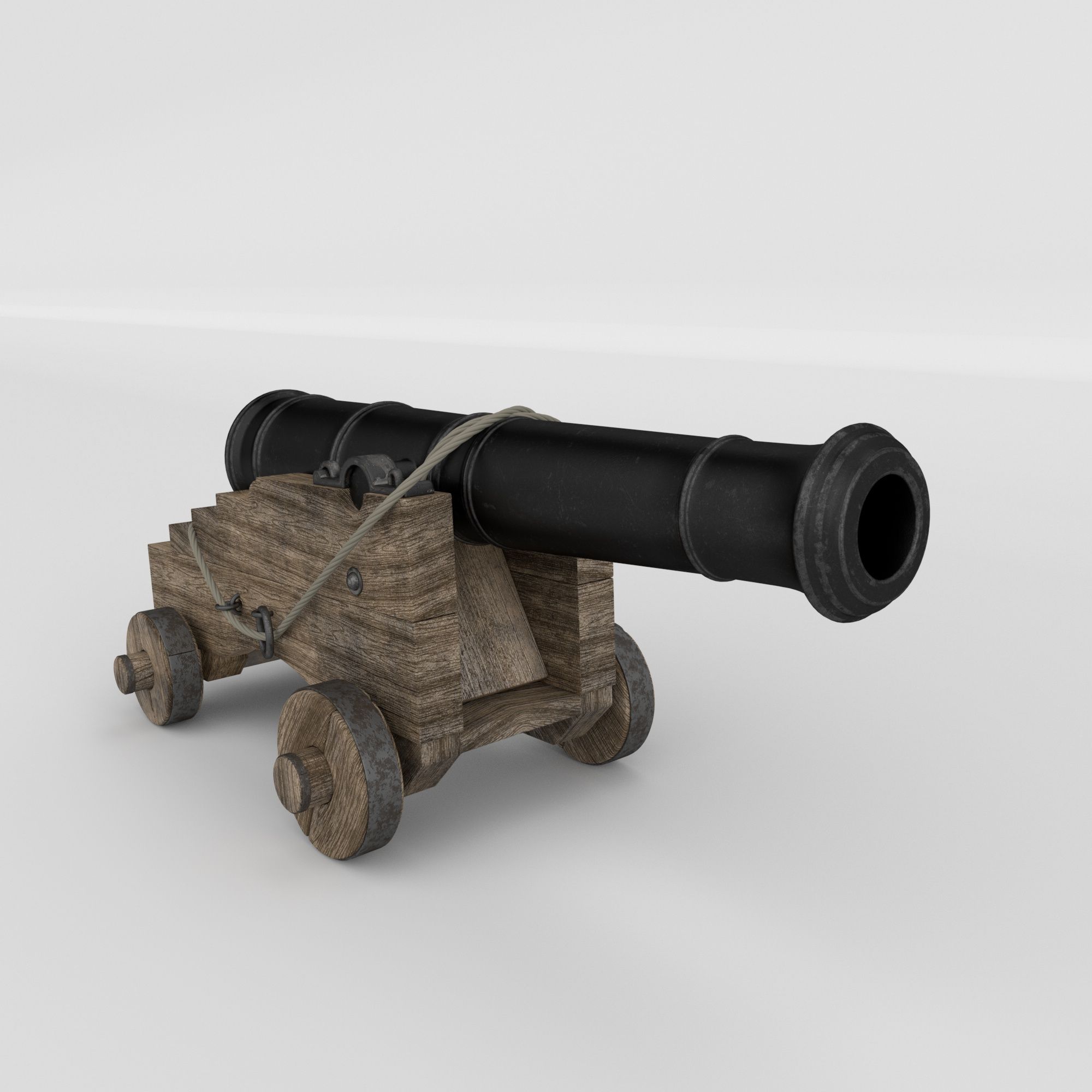


玩具海军大炮 3D模型
0


81
访问量

提交者
Roebaggs
规格
- 几何polygonal
- 多边形27,134
- 顶点13,669
- 纹理No
- 索具化No
- 动画No
- 适合3D打印No
- 适合游戏(低多边形)No
- UV映射Yes
- 未封装UVnone
描述
The idea of ship-borne artillery dates back to the classical era. Julius Caesar indicates the use of ship-borne catapults against Britons ashore in his Commentarii de Bello Gallico. The dromons of the Byzantine Empire carried catapults and fire-throwers.
The Battle of Arnemuiden saw the first use of artillery on board ships.
From the late Middle Ages onwards, warships began to carry cannon of various calibres. The Battle of Arnemuiden, fought between England and France in 1338 at the start of the Hundred Years' War, was the first recorded European naval battle using artillery. The English ship Christopher was armed with three cannons and one hand gun. By the mid 15th century, Italian and English warships were routinely carrying guns.
The 16th century was an era of transition in naval warfare. Since ancient times, war at sea had been fought much like that on land: with melee weapons and bows and arrows, but on floating wooden platforms rather than battlefields. Though the introduction of guns was a significant change, it only slowly changed the dynamics of ship-to-ship combat. As guns became heavier and able to take more powerful gunpowder charges, they needed to be placed lower in the ship, closer to the water line.
Although some 16th-century galleys mounted broadside cannon, they did so at the expense of rowing positions which sacrificed speed and mobility. Most galleys retained a naval ram as their most effective means of sinking another ship. Most early cannon were placed in the forecastle and aftercastle of a ship where they might be conveniently pointed in any direction. Early naval artillery was an antipersonnel weapon to deter boarders, because cannon powerful enough to damage ships were heavy enough to destabilize any ship mounting them in an elevated castle
Sep 24, 2019
添加日期
Feb 15, 2022
最后更新
评测
此产品当前没有评测。
为什么不做第一个评测者呢?