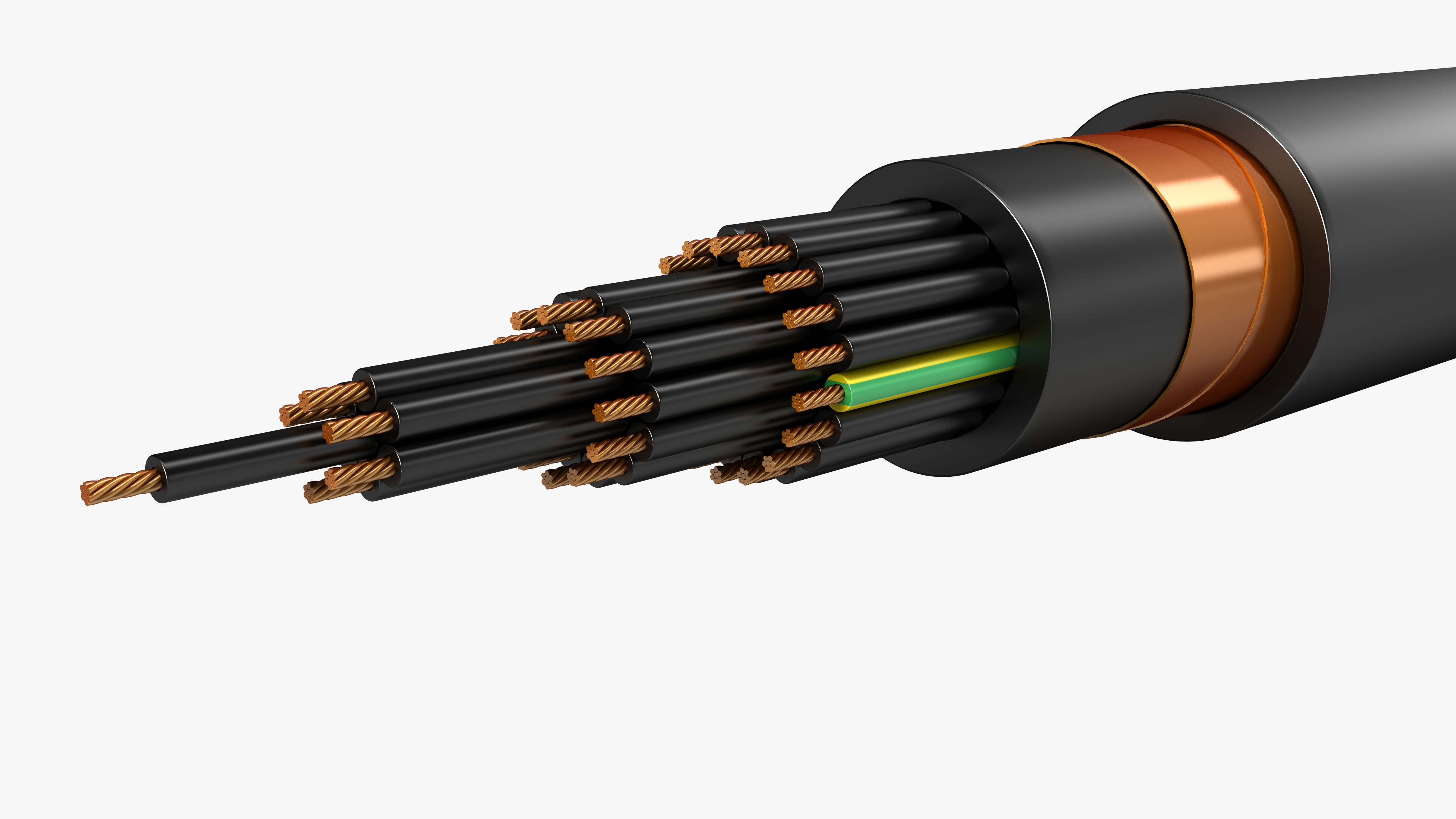




SIGNAL CABLE S-FTP 3D Model
0


760
visits

Submitted by
Cable Master
Specifications
- Geometryunknown
- Polygons0
- Vertices0
- TexturesNo
- RiggedNo
- AnimatedNo
- 3D Printable ReadyNo
- Game Ready (low poly)No
- UV MappedNo
- Unwrapped UVsunknown
Description
S-FTP Pimpf Cat 7 signal cable
Electrical cables may be made flexible by stranding the wires. The technical issue is to reduce the skin effect voltage drop while using with alternating currents.In this process, smaller individual wires are twisted or braided together to produce larger wires that are more flexible than solid wires of similar size. Bunching small wires before concentric stranding adds the most flexibility. A thin coat of a specific material (usually tin-which improved striping of rubber, or for low friction of moving conductors, but it could be silver, gold and another materials and of course the wire can be bare - with no coating material) on the individual wires. Tight lays during stranding makes the cable extensible (CBA - as in telephone handset cords).
Bundling the conductors and eliminating multi-layers ensures a uniform bend radius across each conductor. Pulling and compressing forces balance one another around the high-tensile center cord that provides the necessary inner stability. As a result the cable core remains stable even under maximum bending stress.
Cables can be securely fastened and organized, such as using cable trees with the aid of cable ties or cable lacing. Continuous-flex or flexible cables used in moving applications within cable carriers can be secured using strain relief devices or cable ties. Copper corrodes easily and so should be layered with Lacquer.
Apr 23, 2018
date added
Jul 05, 2023
last update
Reviews
There are currently no reviews for this product.
Why not be the first one to break the ice?