


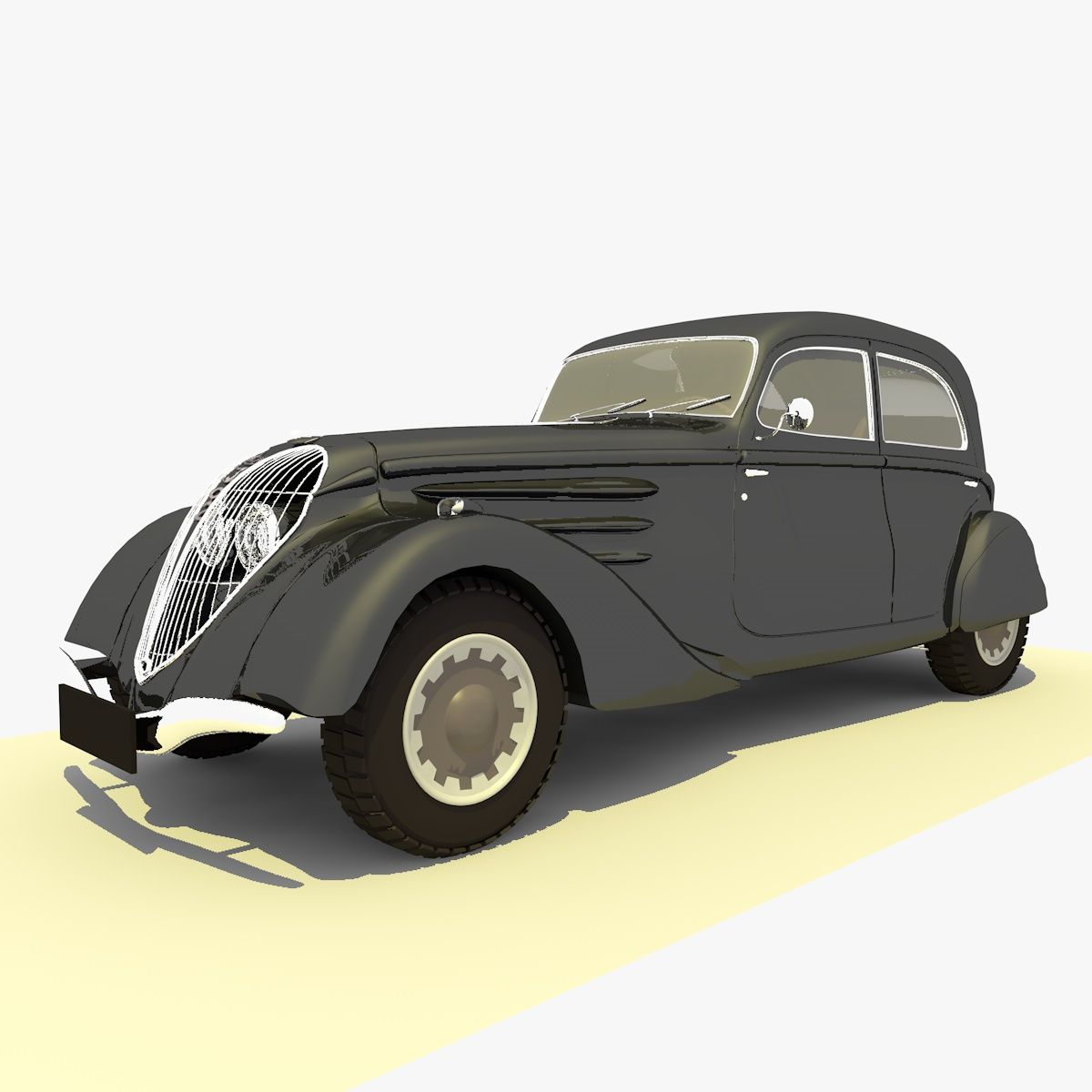
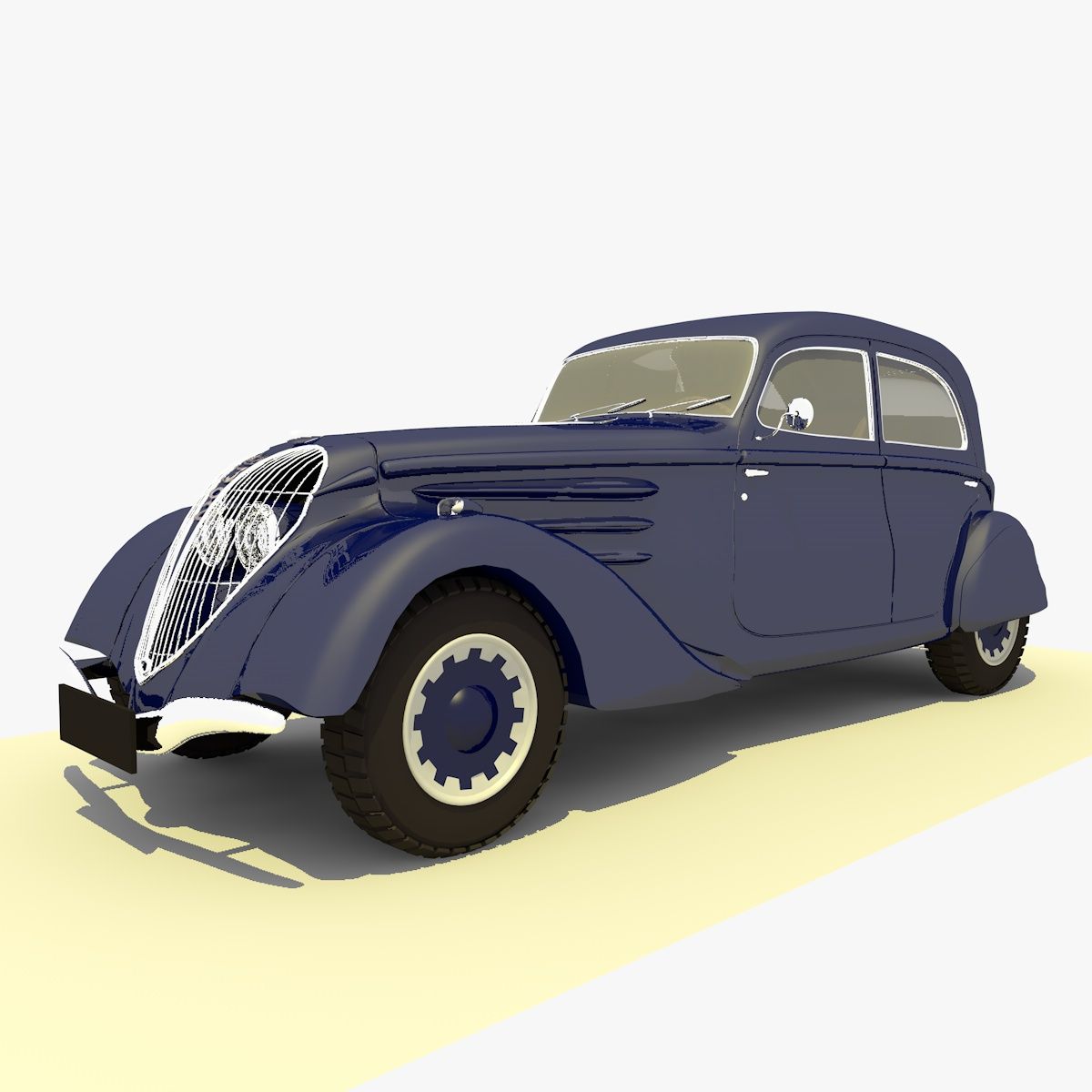
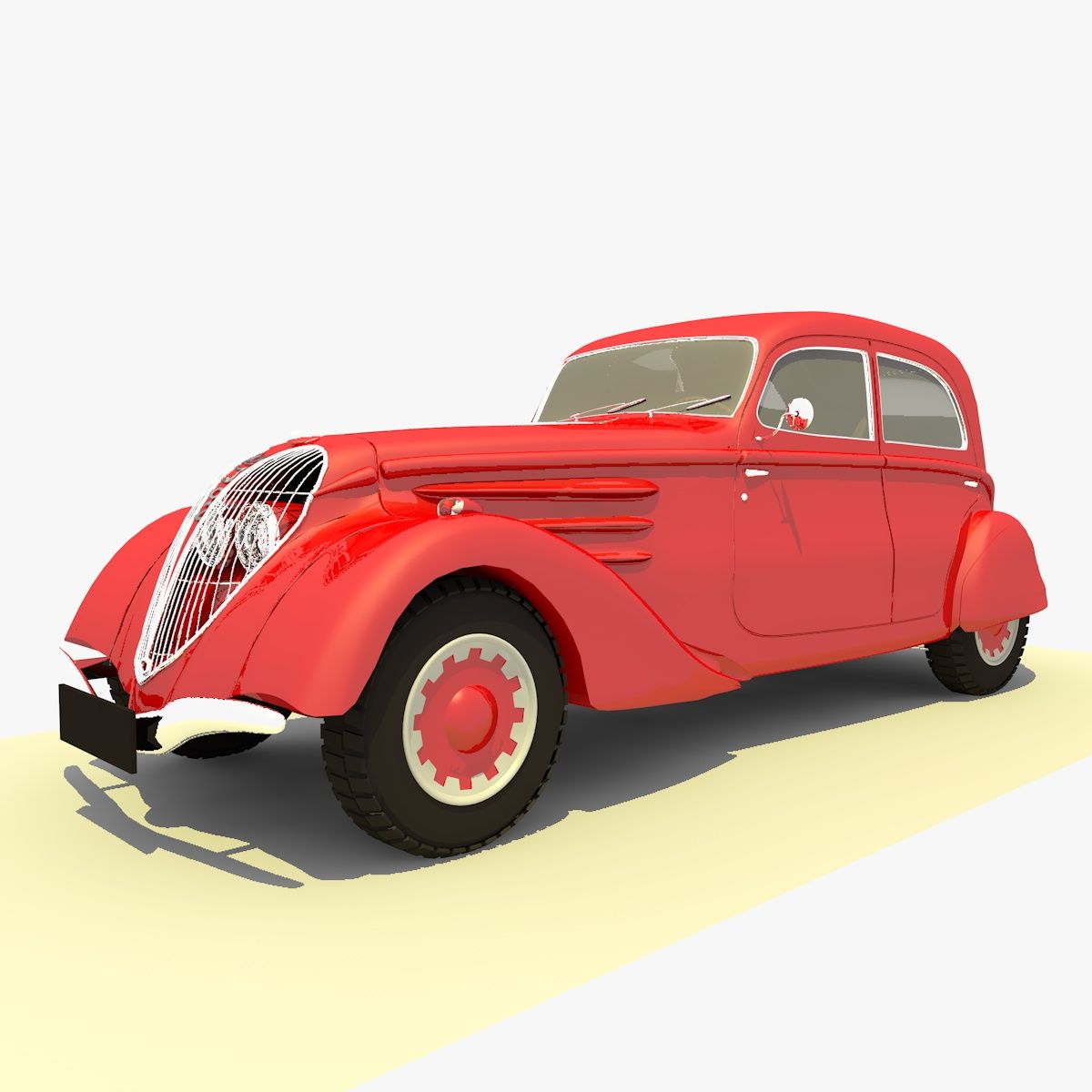


T-26S (1939) 3D-Modell
0


Royalty Free LicenseNur redaktionell
Einfache Rückgabe
Best-Preis-Garantie
Funktioniert aus dem Kasten heraus
827
Besuche

Eingereicht von
Flick Montana
Spezifikationen
- Geometriepolygonal
- Polygone4,300
- Scheitelpunkte0
- TexturenNo
- ManipuliertenNo
- AnimiertNo
- Bereit zum Drucken in 3DNo
- Spielbereit (low poly)No
- UV-kartiertNo
- Unverpackte UVsunknown
Beschreibung
General characteristics
Crew 3
Length 4.88 m
Width 3.41 m
Height 2.41 m
Weight 9.4 tonnes
Armour and armament
Armour 6–25
Main armament 45 mm gun Model 32
Secondary armament 1 or 2×DT machine gun
Mobility
Power plant gasoline GAZ T-26
hp ( kW)
Suspension leaf spring
Road speed 28 km/h
Power/weight hp/tonne
Range 175 km
The T-26 Soviet light tank was based on the British Vickers 6-Ton tank. The Vickers was one of the most successful tank designs of the 1930s. The Vickers design was copied and improved by the Red Army, becoming their most common tank up until 1941.
Its chassis was base for the T-26-T armoured artillery tractor.
First saw action against Japanese forces in the Manchurian border incidents in 1934 and 1935.
T-26 Model 1933 tank in the Spanish Civil War. Note partially welded hull construction and anti-aircraft DT machine gun
Enlarge
T-26 Model 1933 tank in the Spanish Civil War. Note partially welded hull construction and anti-aircraft DT machine gun
During the Spanish civil war of 1936-39, Republican Spain received 362 T-26 model 1933. This was by far the most important pre-WW2 combat experience for Soviet tanks and crews. The Republican T-26s completely outclassed opposing tanks in Spain, which usually had only machineguns as armament. These opposing tanks included the German Panzer I and the Italian CV-33/35 series. The T-26"s 45 mm gun could easily destroy Nationalist tanks, and its HE shell gave it some ability to attack towed antitank guns. Nationalist units frequently succeeded in capturing abandoned T-26s and putting them into service in their own units.
The T-26, like most of the lightly-armored tanks of the 1930s, was vulnerable to mines and towed antitank guns such as the German 37 mm, Italian 47 mm, and Italian 20 mm. The experience of Spain led directly to the next generation of heavily-armored Soviet tanks such as the T-34 and Kliment Voroshilov.
In the Winter War, both sides used T-26s. As in Spain, the T-26s armour was found inadequate against towed anti-tank weapons. Dozens of these tanks were captured by the Finns and used until the end of WWII.
When Germany invaded the Soviet Union in Operation Barbarossa, the T-26 was the most numerous tank in Red Army units. The T-26 was the equal of the German Panzer 35(t) and Panzer 38(t) light tanks, and outclassed the still-numerous Panzer II. However, they were themselves outclassed by the German Panzer III and Panzer IV. More importantly, by June 1941 a high percentage of the T-26 fleet was old and in a very poor state of repair. Crews were not well trained and leadership was poor, leading to huge losses of tanks and men. Most of the remaining T-26s were abandoned or destroyed during 1941 battles of the WWII. They became relatively uncommon by mid-1942, when the few surviving vehicles were taken out of use.
A few T-26s were used by the German forces in anti-partisan operations far from the front lines.
(Low poly, Game-Ready!)
Feb 23, 2018
Datum hinzugefügt
Jan 22, 2025
letztes Update
Bewertungen
Es liegen noch keine Bewertungen für dieses Produkt vor.
Warum nicht der erste sein, der das Eis bricht?