



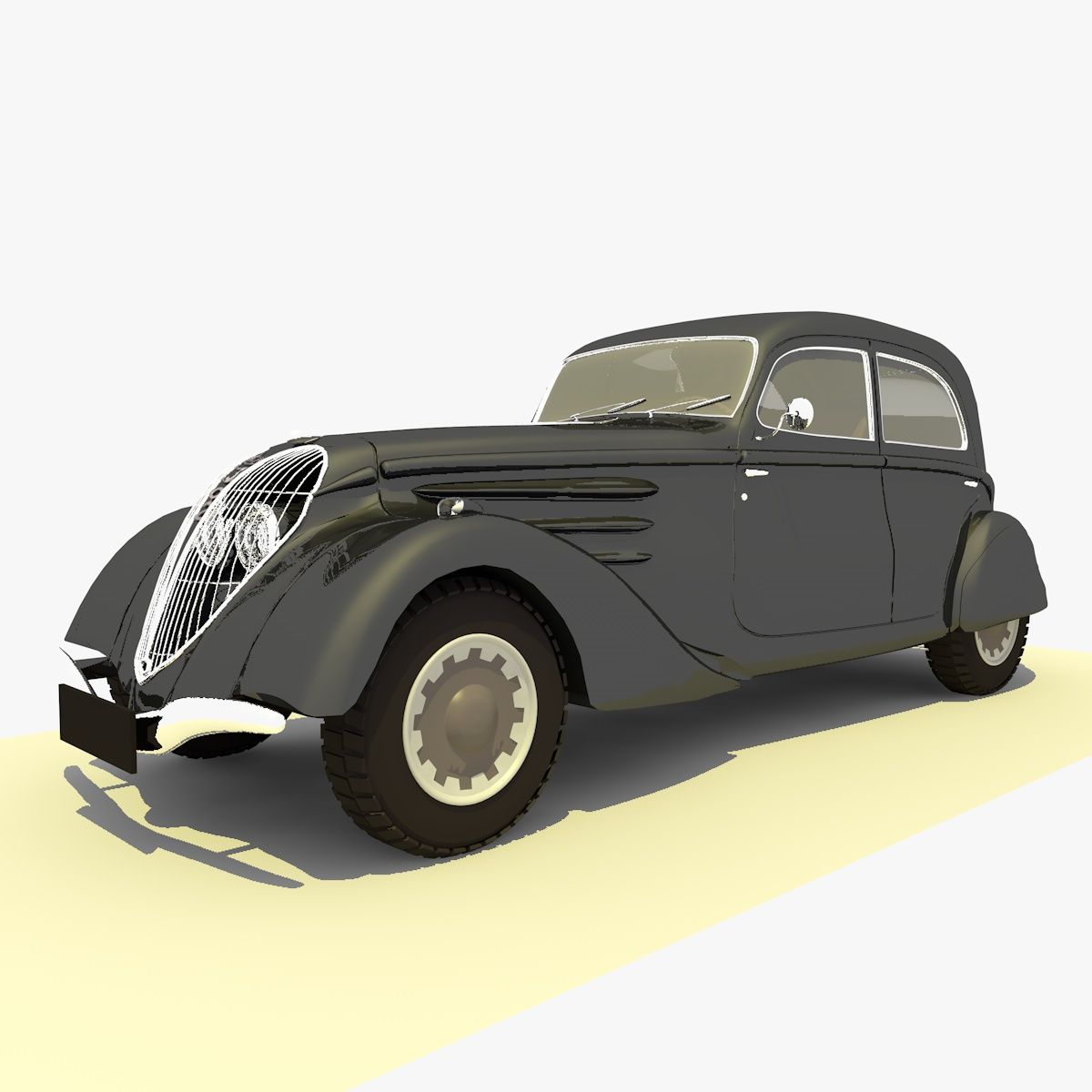
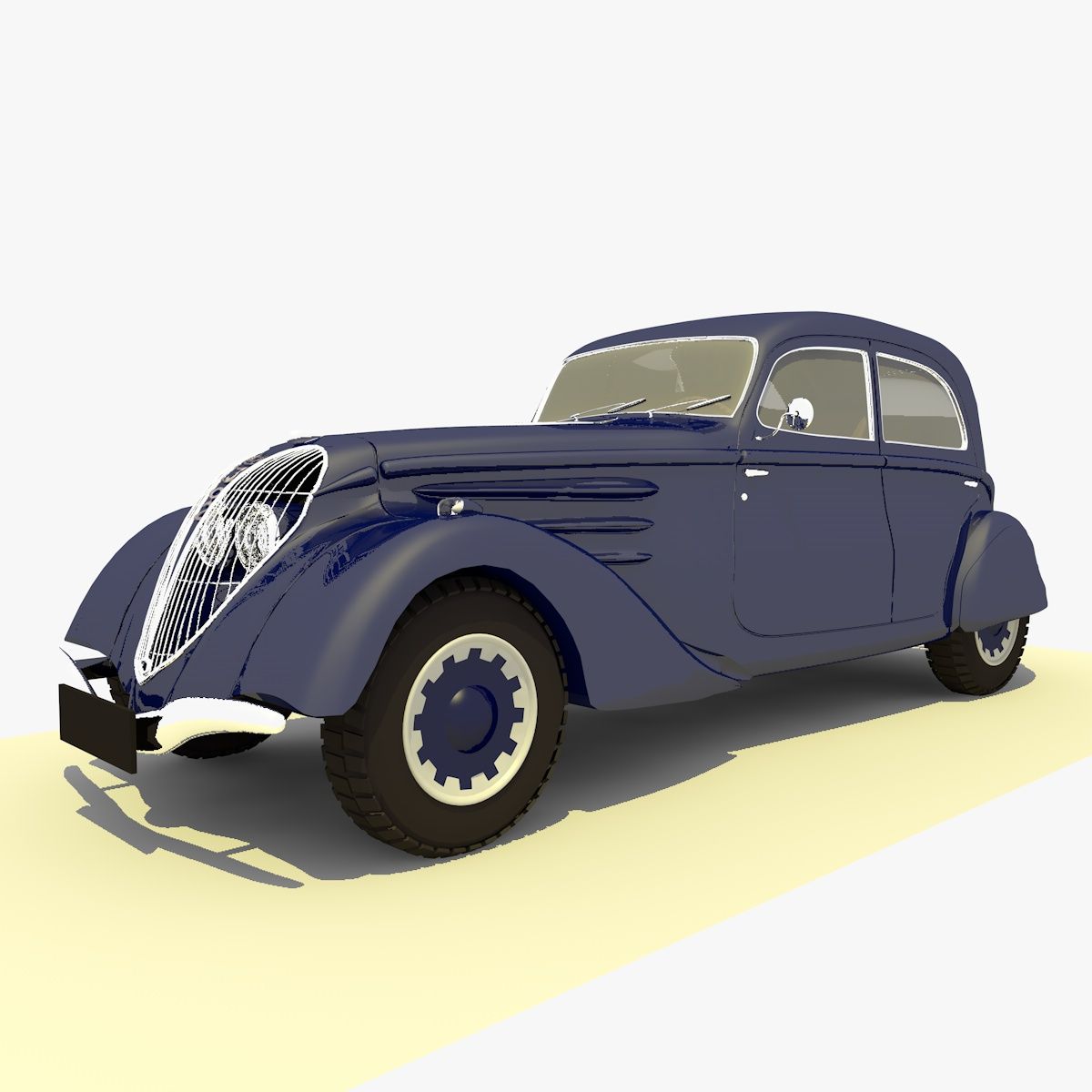
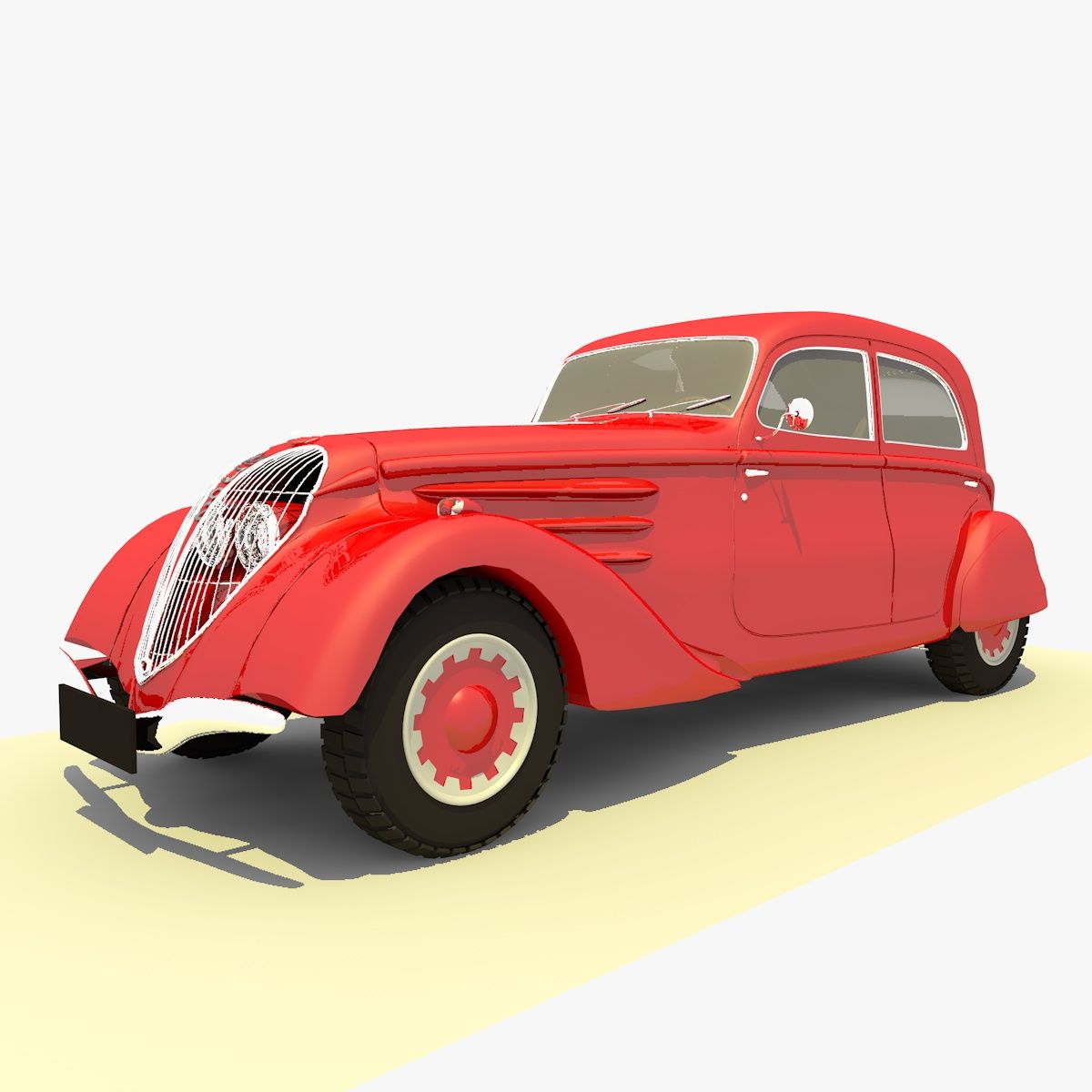


T-26S (1939) Modello 3D
0


Licenza RoyaltySolo editoriale
Ritorni semplici
Miglior prezzo garantito
Funziona fuori dalla scatola
827
visite

Inviato da
Flick Montana
specificazioni
- Geometriapolygonal
- poligoni4,300
- vertici0
- TexturesNo
- riggedNo
- AnimatoNo
- Prontabile in 3DNo
- Gioco pronto (low poly)No
- UV mappatoNo
- UV non avvoltounknown
Descrizione
General characteristics
Crew 3
Length 4.88 m
Width 3.41 m
Height 2.41 m
Weight 9.4 tonnes
Armour and armament
Armour 6–25
Main armament 45 mm gun Model 32
Secondary armament 1 or 2×DT machine gun
Mobility
Power plant gasoline GAZ T-26
hp ( kW)
Suspension leaf spring
Road speed 28 km/h
Power/weight hp/tonne
Range 175 km
The T-26 Soviet light tank was based on the British Vickers 6-Ton tank. The Vickers was one of the most successful tank designs of the 1930s. The Vickers design was copied and improved by the Red Army, becoming their most common tank up until 1941.
Its chassis was base for the T-26-T armoured artillery tractor.
First saw action against Japanese forces in the Manchurian border incidents in 1934 and 1935.
T-26 Model 1933 tank in the Spanish Civil War. Note partially welded hull construction and anti-aircraft DT machine gun
Enlarge
T-26 Model 1933 tank in the Spanish Civil War. Note partially welded hull construction and anti-aircraft DT machine gun
During the Spanish civil war of 1936-39, Republican Spain received 362 T-26 model 1933. This was by far the most important pre-WW2 combat experience for Soviet tanks and crews. The Republican T-26s completely outclassed opposing tanks in Spain, which usually had only machineguns as armament. These opposing tanks included the German Panzer I and the Italian CV-33/35 series. The T-26"s 45 mm gun could easily destroy Nationalist tanks, and its HE shell gave it some ability to attack towed antitank guns. Nationalist units frequently succeeded in capturing abandoned T-26s and putting them into service in their own units.
The T-26, like most of the lightly-armored tanks of the 1930s, was vulnerable to mines and towed antitank guns such as the German 37 mm, Italian 47 mm, and Italian 20 mm. The experience of Spain led directly to the next generation of heavily-armored Soviet tanks such as the T-34 and Kliment Voroshilov.
In the Winter War, both sides used T-26s. As in Spain, the T-26s armour was found inadequate against towed anti-tank weapons. Dozens of these tanks were captured by the Finns and used until the end of WWII.
When Germany invaded the Soviet Union in Operation Barbarossa, the T-26 was the most numerous tank in Red Army units. The T-26 was the equal of the German Panzer 35(t) and Panzer 38(t) light tanks, and outclassed the still-numerous Panzer II. However, they were themselves outclassed by the German Panzer III and Panzer IV. More importantly, by June 1941 a high percentage of the T-26 fleet was old and in a very poor state of repair. Crews were not well trained and leadership was poor, leading to huge losses of tanks and men. Most of the remaining T-26s were abandoned or destroyed during 1941 battles of the WWII. They became relatively uncommon by mid-1942, when the few surviving vehicles were taken out of use.
A few T-26s were used by the German forces in anti-partisan operations far from the front lines.
(Low poly, Game-Ready!)
Caratteristiche generali Equipaggio 3 Lunghezza 4,88 m Larghezza 3,41 m Altezza 2,41 m Peso 9,4 tonnellate Armatura e armamento Armatura 6-25 Armamento principale Pistola 45 mm Modello 32 Armamento secondario 1 o 2 × DT mitragliatrice Mobilità Benzina centrale elettrica GAZ T-26 hp (kW ) Sospensioni a balestra Velocità su strada 28 km / h Potenza / peso hp / tonn. Gamma 175 km Il serbatoio leggero sovietico T-26 era basato sul serbatoio britannico da 6 tonnellate Vickers. Il Vickers fu uno dei modelli di carri armati più riusciti degli anni '30. Il design Vickers è stato copiato e migliorato dall'esercito rosso, diventando il loro serbatoio più comune fino al 1941. Il suo telaio era la base per il T-26-T artiglieria blindata. Prima azione segreta contro le forze giapponesi negli incidenti di frontiera della Manciuria nel 1934 e nel 1935. Carro armato modello 1933 del T-26 nella guerra civile spagnola. Nota costruzione scafo parzialmente saldato e mitragliatrice antiaerea DT Allarga il carro armato modello 1933 T-26 nella guerra civile spagnola. Nota costruzione scafo parzialmente saldato e mitragliatrice antiaereo DT Durante la guerra civile spagnola del 1936-39, la Spagna repubblicana ricevette 362 modelli T-26 del 1933. Questa fu di gran lunga la più importante esperienza di combattimento pre-WW2 per carri armati e equipaggi sovietici. I T-26 repubblicani surclassarono completamente i carri armati avversari in Spagna, che di solito avevano solo mitragliatrici come armamento. Questi carri armati avversari includevano il Panzer I tedesco e la serie CV-33/35 italiana. Il cannone da 45 mm del T-26 poteva facilmente distruggere i carri armati nazionalisti, e il suo guscio HE gli dava la possibilità di attaccare i cannoni anticarro rimorchiati.Le unità nazionaliste riuscivano spesso a catturare T-26 abbandonati e metterli in servizio nelle loro stesse unità. T-26, come la maggior parte dei carri armati leggermente corazzati degli anni '30, era vulnerabile alle mine e ai cannoni anticarro rimorchiati come il tedesco 37 mm, l'italiano 47 mm e l'italiano da 20 mm. L'esperienza spagnola portò direttamente alla generazione successiva di carri armati sovietici pesantemente corazzati come il T-34 e Kliment Voroshilov Nella Guerra d'Inverno, entrambe le parti usavano il T-26. Come in Spagna, l'armatura del T-26 fu trovata inadeguata contro le armi anticarro rimorchiate. i carri armati furono catturati dai finlandesi e usati fino alla fine della Seconda Guerra Mondiale. Quando la Germania invase l'Unione Sovietica nell'operazione Barbarossa, il T-26 era il carro armato più numeroso delle unità dell'Armata Rossa. Il T-26 era pari al Panzer tedesco 35 (t) e Panzer 38 (t) carri armati leggeri e surclassato il Panzer II ancora numeroso . Tuttavia, essi furono surclassati dai Panzer III e Panzer IV tedeschi. Ancora più importante, nel giugno 1941 un'alta percentuale della flotta T-26 era vecchia e in pessimo stato di manutenzione. Gli equipaggi non erano ben addestrati e la leadership era scarsa, portando a enormi perdite di carri armati e uomini. La maggior parte dei rimanenti T-26 furono abbandonati o distrutti durante le battaglie del 1941 della Seconda Guerra Mondiale. Divennero relativamente rari a metà del 1942, quando i pochi veicoli superstiti furono messi fuori uso. Alcuni T-26 furono usati dalle forze tedesche nelle operazioni antipartigiane lontano dalle linee del fronte. (Low poly, pronto per il gioco!)
Feb 23, 2018
Data aggiunta
Jan 22, 2025
ultimo aggiornamento
Recensioni
Al momento non ci sono commenti per questo prodotto.
Perché non essere il primo a rompere il ghiaccio?