





amilosio Modello 3D
0


Licenza RoyaltyTutti gli usi estesi
Ritorni semplici
Miglior prezzo garantito
Funziona fuori dalla scatola
50
visite

Inviato da
MichaelTaylor3D
specificazioni
- Geometriapolygonal
- poligoni127,860
- vertici66,466
- TexturesYes
- riggedNo
- AnimatoNo
- Prontabile in 3DNo
- Gioco pronto (low poly)No
- UV mappatoNo
- UV non avvoltounknown
Descrizione
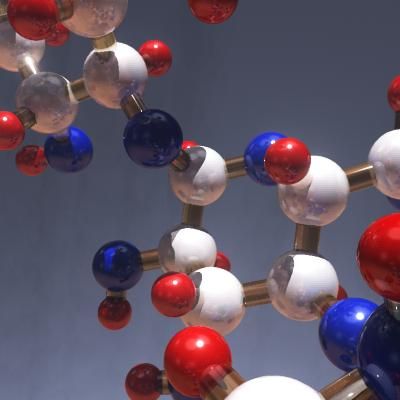
This is a ready to go out-of-box molecule, It is 100% accurate to the real chemical structure, Real scientific data was used as a reference to the construction of this model.
Amylose is a linear polymer of glucose.
Amylose is one of the two components of starch, the other being amylopectin. Amylose is soluble in water.
The carbon atoms on glucose are numbered, starting at the aldehyde (C=O) carbon. In amylose, the 1-carbon on one glucose molecule is linked to the 4-carbon on the next glucose molecule (?(1?4) bonds). It can be made of several thousand glucose units.
The ?(1?4) bonds promote the formation of a helix structure. The structural formula of amylose is pictured at right. The number of repeated glucose subunits (n) is usually in the range of 300 to 3000, but can be many thousands. There are six glucose monomers per helix.
Amylose starch is less readily digested than amylopectin; however, it takes up less space so is preferred for storage in plants. It makes-up about 30% of the stored starch in plants, though the specific percentage varies by species. The digestive enzyme amylase breaks down the starch molecule into maltotriose and maltose.
Iodine molecules fit neatly inside the helical structure of amylose, binding with the starch polymer that absorbs certain known wavelengths of light. Hence, a common test for starch is to mix it with a small amount of yellow iodine solution. In the presence of amylose, a blue-black color will be observed. The intensity of the color can be tested with a colorimeter, using a red filter to discern the concentration of starch present in the solution.
High-amylose varieties of rice have a much lower glycemic load, which could be beneficial for diabetics.
Sep 24, 2019
Data aggiunta
Jan 24, 2022
ultimo aggiornamento
Recensioni
Al momento non ci sono commenti per questo prodotto.
Perché non essere il primo a rompere il ghiaccio?