









Lorenz Attractor Pendants 3D 모델
0


0
방문

에 의해 제출 된
designsbydesire
명세서
- 기하학polygonal
- 다각형849,066
- 정점들225,548
- 텍스처No
- 딱딱한No
- 생기 있는No
- 3D 인쇄 가능 준비No
- 게임 준비 (낮은 폴리)No
- UV 매핑 됨Yes
- 포장되지 않은 자외선none
기술
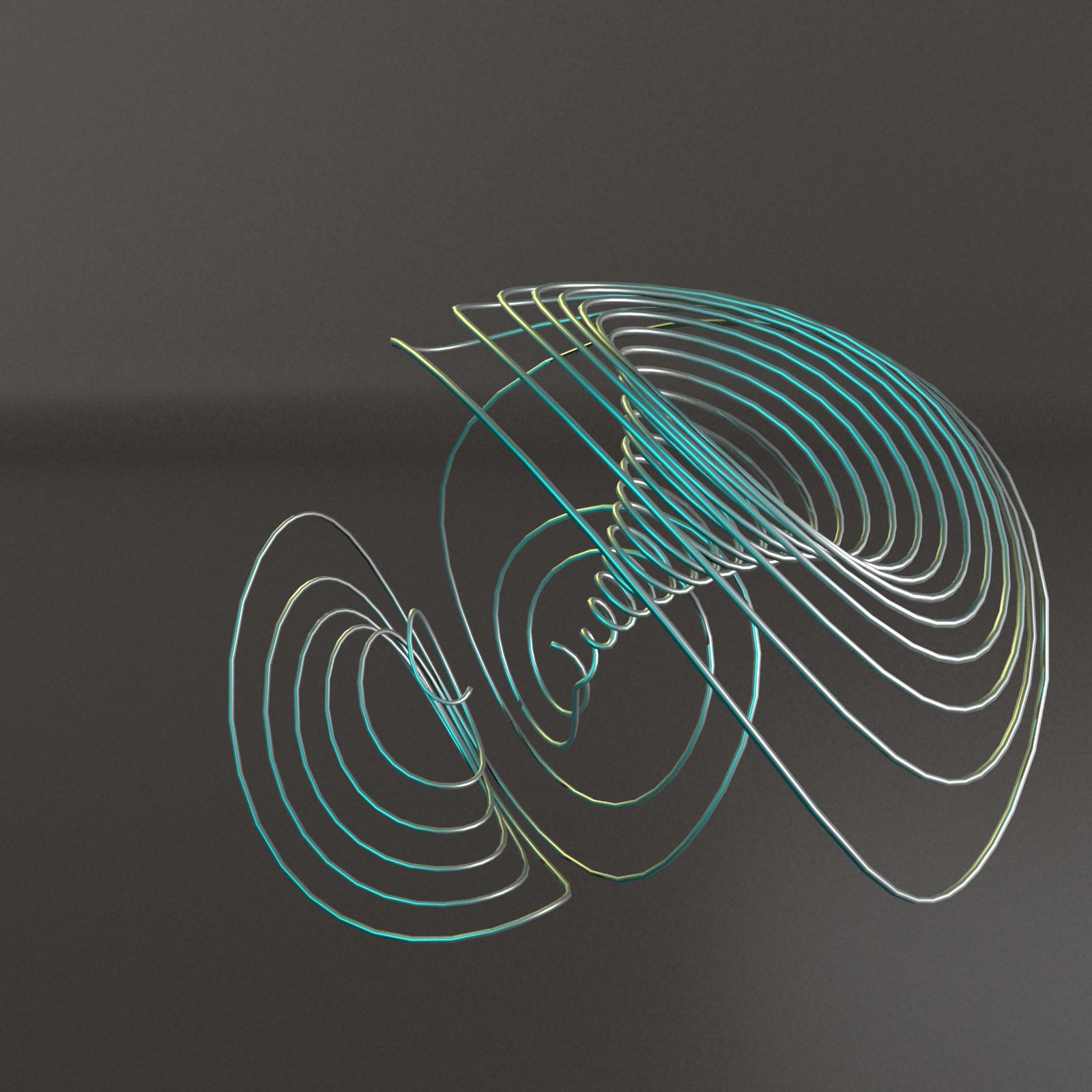
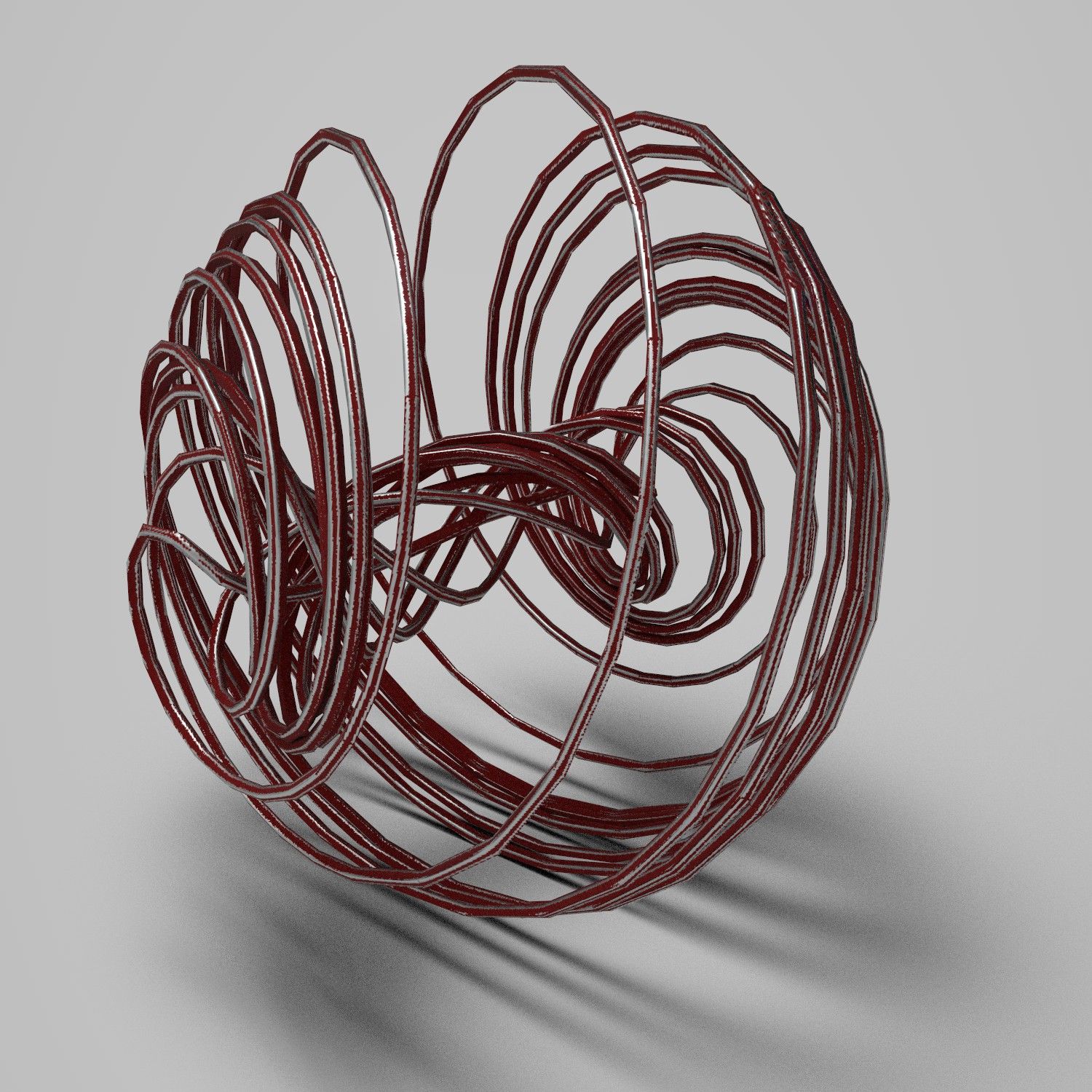
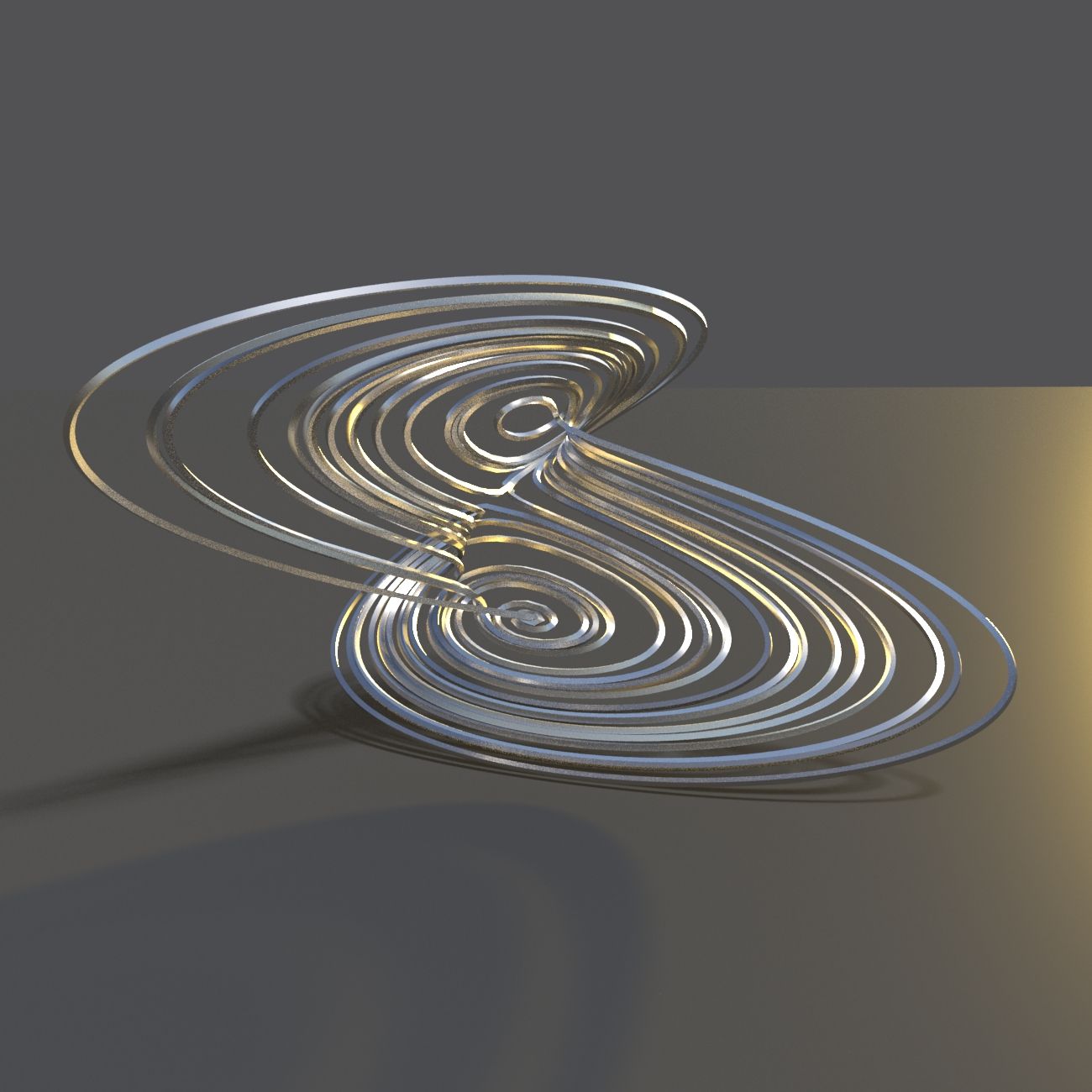
Chaos theory, a mathematical theory, describes the behavior of dynamical systems in which elaborated models depict beautifully ordered structures derived from inherently unpredictable systems. The fluidity of the pendants suggest changing patterns of motion in three-dimensional space and modes of infinity and natural complexity. A celestial light display is a transcendent manifestation of the objects, unique at every angle. Pondering the continuity of time and space, the pendants are pronounced with a sensitive initial state and a pre-determined termination state. The first chaotic model, Lorenz system, unveiled the complex behaviors of the nonlinear dynamical systems. The lighting fixtures follow the topological structure of selected demonstrated attractors such as Sprott, Chen, Chua, and other well-known Lorenz-type and quasi-attractors-type strange attractors. The Sprott and Chen models are three smooth autonomous ordinary differential equations. Sprott has a single quadratic nonlinear term while the famous two-scroll Chen attractor has two. Chuas model has a third-order autonomous circuit demonstrating strange attractors having periodic orbits of different topological types. Also, the designs include a three-scroll unified chaotic system and a single four-scroll attractor. And, the realized fractal shapes include unstable invariant topological cylinders that arent hyperbolic and a sphere with a tube-like structure revolving around its central axis.
*I have uploaded the grasshopper definition and the mathematical equations I used to get the results.
Jun 09, 2020
추가 된 날짜
Feb 11, 2022
마지막 업데이트
리뷰
현재이 제품에 대한 리뷰가 없습니다.
얼음을 깬 첫 번째 사람이되지 않겠습니까?